
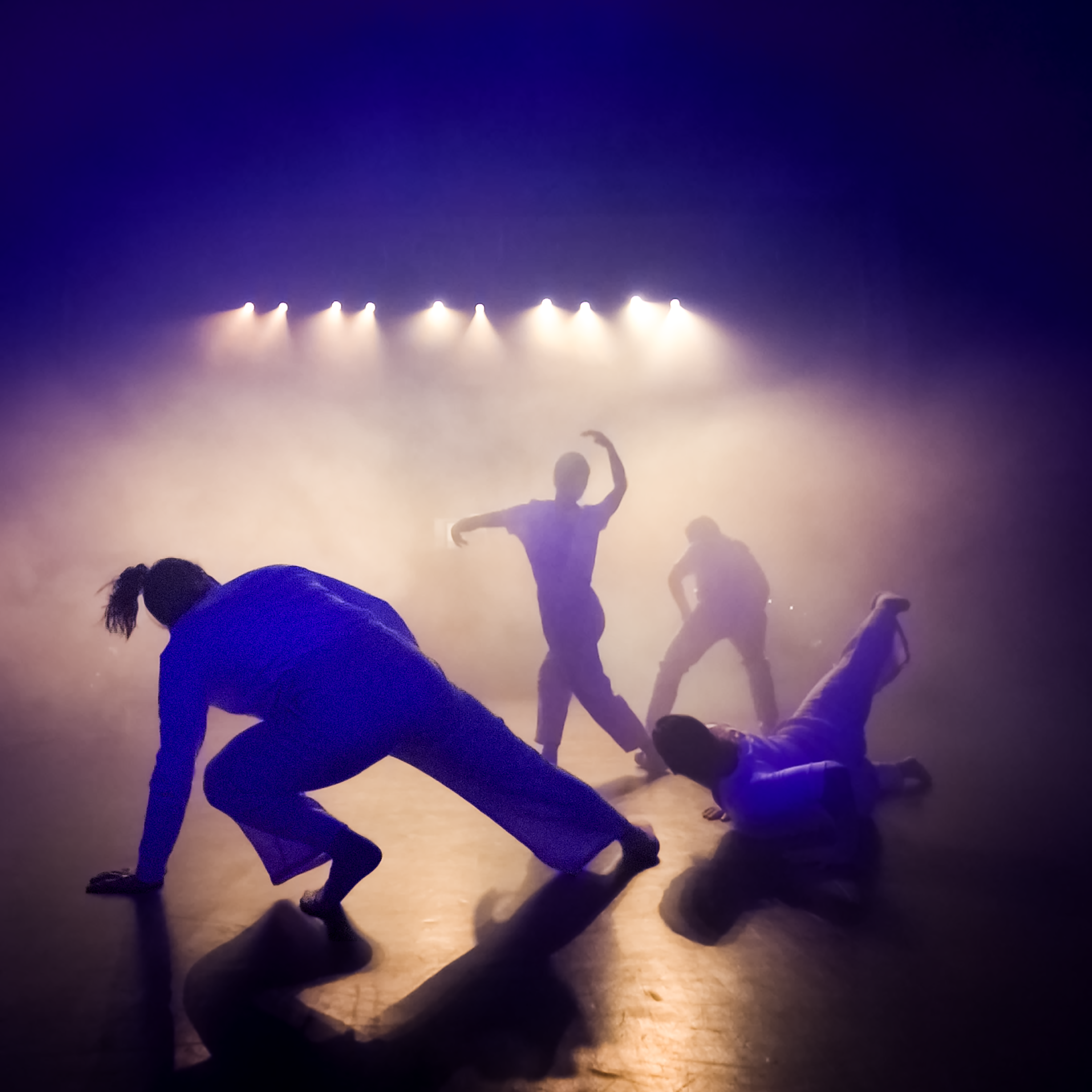

Arguably, Noam Gagnon has been dancing on the edge ever since he started classes at Concordia University, where he had thought he might major in psychology. The Quebec-born dancer, choreographer and pilates instructor has no fear of risk: safe is not in his vocabulary except as a synonym for boring.
Gagnon will be the opening show at the 37th Dancing on the Edge festival, June 12 to 21 at the Firehall Arts Centre and SFU Woodward’s in Vancouver. The longest running dance festival in Canada will this year feature 17 companies, making up an eclectic but intriguing program of the kind artistic producer and DOTE co-founder Donna Spencer has perfected over the years.
As anyone familiar with Holy Body Tattoo, the company formed by Gagnon, Dana Gingras and musician Jean-Yves Theriault in 1993 will know, edginess has long been a hallmark of Gagnon’s work in dance. It’s true, he says of Holy Body shows such as our brief eternity: “We left it on the floor. Physically, emotionally, in every way, we gave it our all.”
being is the title of the piece Gagnon is bringing to the festival. “I think everyone is going to be surprised. It took a turn,” he says of this solo, created in collaboration with musician Stefan Smulovitz and first performed two years ago.
The solo, he explains, was a driven by a physical language and emotional language that emerged in the creative process. This version, Gagnon says, “is more based on the maturity I have gained . . . Now there’s a different emotionality that goes with my being.”
Recognizing the honour in being chosen to open the festival, Gagnon had to ask himself whether he was delivering what the festival audience would expect with him. So he kept working and re-working, with lots of input from Smulovitz, who join Gagnon on stage, because, he says, “at the end of the day, I’m a showman.”
Newton Moraes, a Toronto performer and artistic director of the 25-year-old company, Newton Moraes Dance Theatre, performs in the second half on the opening mixed program with Gagnon (which repeats later in the festival). He’s a first-timer with Dancing on the Edge. Moraes, a native of Porto Alegre, Brazil, also started out with a different idea of what he career he might pursue before dance found him, especially after he moved to Canada.
Moraes is thrilled to have been programmed into this festival. “It means so much to be part of this incredible platform that celebrates powerful and innovative dance.” He’ll be performing a new solo called Dance Is Not My Hobby. A woman who was once a close friend challenged him one day by suggesting that dance was simply a hobby for Moraes. It’s not. “Dance is a vital expression of my identity. At 62 years old, as an LGBTQ man, I’m committed to continuing my performances.” His choreography has drawn on a “rich tapestry of influences,” including African Brazilian spirituality and many artists he admires. The solos, pays homage to some of those artists and to the late Robert Shirley, the partner who brought Moraes to Canada.
Donna Spencer is much admired by dancers and choreographers familiar with the festival. One of them is Serge Bennathan, the French-born dancer, choreographer, artistic director, painter and poet. A Vancouverite for a good part of the year, Bennathan says, “Ah oui. Dancing on the Edge holds a very special place in my heart.” Spencer invited him to perform in the first festival in 1988 when he’d only been in Vancouver for a few months. Dancing on the Edge, says Bennathan, introduced him to the West Coast dance community and has been a launching pad for many a dance artist.
Dance festivals in Canada have had a hard time staying alive. According to Spencer, who founded the festival with Esther Rausenberg and since the early 1990s has held the title of artistic producer, DOTE’s longevity is a function of “the need for its existence.” The festival has had to operate on a small budget so they have to keep overhead and administrative costs to a minimum to give as much of their funds as possible to the artists. “We believe in the artists and strive to raise their profile with every festival.”
One of the aims of Dancing on the Edge is to represent as much of Canada as possible. Jenn Edwards, performing The Centre of Time on June 18 and 19, has been based in Labrador since 2019. She grew up in Burnaby, BC, and came to dance and choreography from figure skating. Edwards spent some formative years of her career in Berlin and Vienna, so she too has absorbed influences from far and wide.
The Centre of Time, developed during a couple of residencies, is a world premiere. The piece came out of Edwards’s meditations on time as perceived through the moving body. An important element of the piece is a film created by Brad Dillon that screens on a backdrop. “It was shot on a frozen lake — the temperature was minus 30 that day — using a video camera and a drone. I really like the otherworldly effect of that.” Dillon’s camera also captured the shadows cast by the dancers — Edwards and three others — to produce an effect where the dancers and their shadows are interacting.
Be sure to consult the full festival line-up at www.dancingontheedge.org or if you want to be surprised and delighted, just turn up and see what you can see.
Dancing on the Edge
June 12 to 21
Firehall Arts Centre, SFU Woodward’s, Vancouver BC
Photos, courtesy of the artists, clockwise: Newton Moraes/Dance Is Not My Hobby; Jenn Edwards/The Centre of Time; Noam Gagnon/being
 susan walker's artsblog