
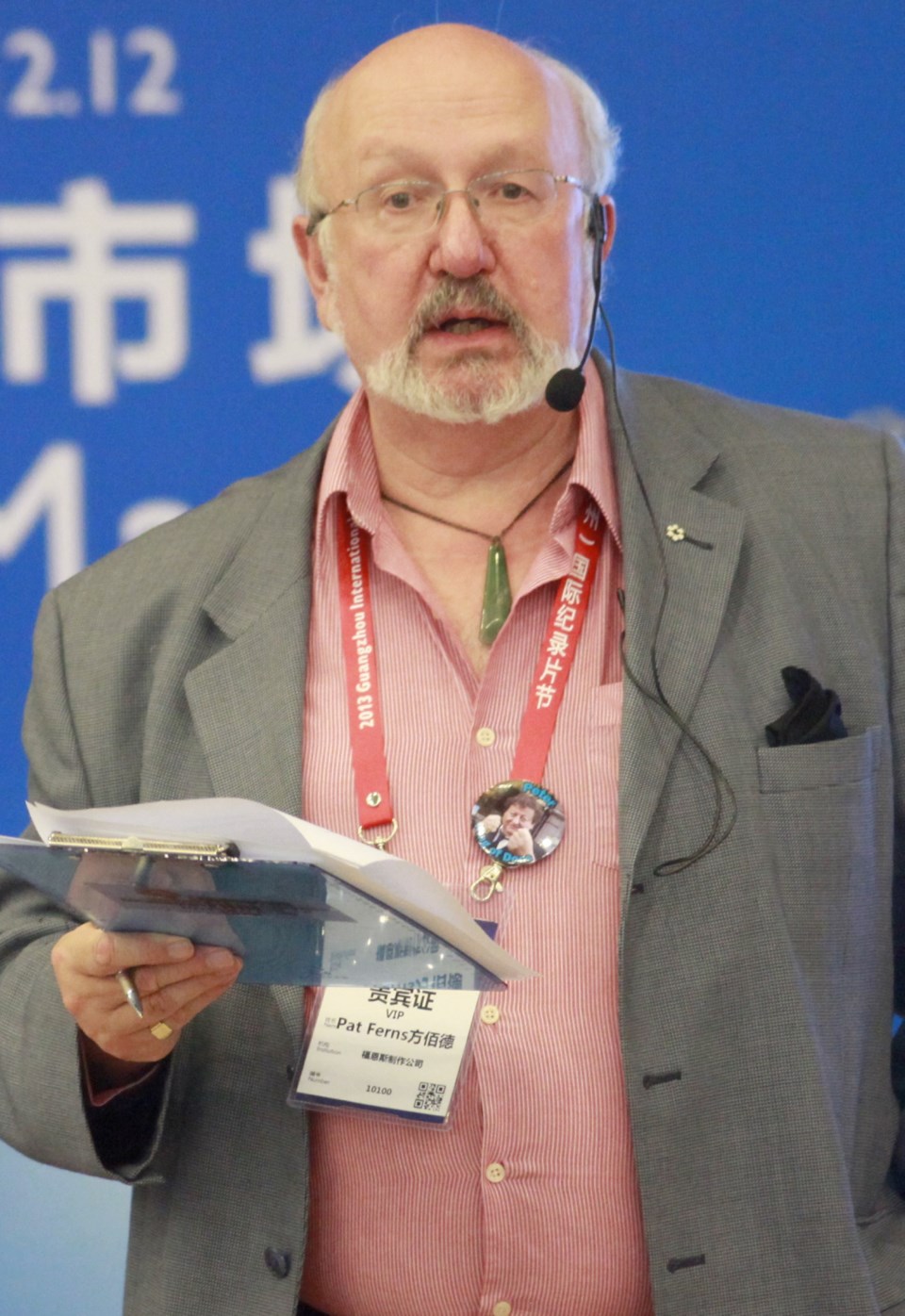

Pat Ferns’ The Big Picture: A Personal History of Independent Television Production in Canada is a revealing, five-decade account of Ferns’ significant contribution to film, television and documentary production. Among the revelations: if you want to make it in television production in Canada, you’d best be able to think on your feet and improvise. And even then, the odds are against any Canadian making a fortune producing films or miniseries for broadcast in Canada and abroad.
Ferns’ story is one of sheer resourcefulness, putting together co-productions wherever he could find a broadcaster or a source of funding. Along the way he was a lobbyist for more effective government support for independent tv and film producers and a champion for the Canadian broadcasting of Canadian productions. Official statistics show that in 2023, the independent production sector delivered $12.2 billion in annual production volume, generating $14.1 billion in GDP, “supporting nearly a quarter of a million jobs.”
The memoir foregrounds the life and activities of a passionate Canadian creator against a backdrop of disappointment with the way the CBC, Canadian commercial networks, and cultural institutions such as the National Film Board have failed the independent production companies that blossomed from the ‘70s to the ‘90s. Production houses such as Nielsen Ferns, Ferns’ own Primedia, Nelvana, Rhombus Media and Alliance Atlantis (now Lionsgate) now are either defunct or have changed direction, their works seldom picked up by Canadian broadcasters.
Ferns, born in Winnipeg in 1945 to Harry and Maureen Ferns, spent his childhood and adolescence in Birmingham, England. “We were thrown out of Canada, basically,” says the now (nearly) retired producer. In 1949 Harry’s teaching post at Royal Roads Military College in Victoria suddenly dried up after someone dug up his Marxist leanings and accused him of being a Communist.
The happy result of this exile was that Pat (short for Paterson), only four when the family landed in the UK, got into an especially good grammar school in Birmingham and went on to earn a BA from Cambridge University and his Master’s from the Centre for Cultural Studies at Birmingham University. It was at Cambridge that Ferns got the acting and producing bug.
Following graduation and now engaged to Jenny, his childhood sweetheart, Ferns made plans to return to Canada. He got the address of the CBC and wrote to a staff producer named Dick Nielsen.
“He was thinking he was getting the big weekend current affairs show and he was looking for a director of research,” Ferns writes. “He liked my handwriting and he remembered letters my father had written to The Globe and Mail. So, on the basis of that, I was hired.”
Early on, the callow director of research was sent out on a shoot in Red Lake, Northern Ontario with producer Don Cumming. They were documenting life in a mining town for a segment of a show inspired by Richard Rohmer’s idea to develop a mid-Canada corridor, to facilitate more extraction of natural resources. Cumming got into a confrontation with some drunken youths and ended up in hospital. “That left me with the duties of the producer, who in those days was in effect the director, writer and interviewer,” as Ferns tells it. “Somehow, I pulled it off.” Relying on a good cameraman, the new hire made himself look as if he knew what he was doing.
The left-leaning Nielsen soon realized he wasn’t destined for promotion at the Mother Corp. “We plotted to leave and form an independent production company,” says Ferns. Nielsen-Ferns was born in 1972. Their first production was a six-part series on Christian faith called A Third Testament, written and presented by British author and Christian convert Malcom Muggeridge, introducing six men in search of God, from Augustine of Hippo to Dietrich Bonhoeffer. The series was aired in French and English on the CBC/Radio Canada in 1974-75 and was acquired for international distribution by Time-Life Films.
From its launch in 1972, Nielsen-Ferns Ltd was a trailblazer and its productions were a cut above the daily fare of network television. In1976, when Torstar bought the company, they continued to cover the waterfront of Canadian culture with such titles as The Newcomers/Les Arrivants, the impressive Cities series, a collaboration with John McGreevy Productions in which presenters such as Peter Ustinov and Glenn Gould toured their home cities, and Portraits of Power, profiling leaders such as Mao Zedong and post-war German Chancellor Konrad Adenauer. As well, Nielsen-Ferns created a platform for British naturalist and writer Gerald Durrell, with two series, The Stationary Ark and Ark on the Move. The Wars, an adaptation of Timothy Findley’s novel about a Canadian in World War I, was a Nielsen-Ferns International feature film directed by then Stratford Festival’s AD Robin Phillips, in collaboration with the National Film Board. Released in March 1983, it was lovingly restored forty years on and screened at the Toronto International Film Festival in 2022.
Torstar retained rights to the Nielsen-Ferns brand, so in 1981, Ferns established Primedia Productions Ltd., whose remarkable output includes feature adaptations of Canadian plays Billy Bishop Goes to War (John Gray), Waiting for the Parade (John Murrell) and Stage on Screen (8 Canadian plays). Primedia’s specialty was TV movies and mini-series such as such as Heaven on Earth, Going Home, Glory Enough for All Passion and Paradise, Young Catherine and many more.
From the very start, Ferns had assumed a key role as lobbyist for independent television producers, having become in 1978 the president of the Canadian Film and Television Association. He helped shape the terms of federal government support for independent producers. He voiced an opinion that has only magnified in recent years that the CBC needs to step up to partner with independents. CFTA made an intervention when the national network’s license came up for renewal at the Canadian Radio and Television Commission, producing a document entitled Make or Buy: The Case for Independence.
“I argued,” says Ferns, “that the CBC had a publisher function, but no publisher puts all his authors on staff. You need creative competition to get the best stuff on air. At that CRTC hearing, I proposed that in addition to its government-supplied operating funds and capital funds, it needed a third envelope for independent production. We’d planted a seed. Ultimately it was the concept on which Telefilm Canada’s Broadcast Fund was launched.” Telefilm later morphed into the Canada Media Fund.
As Ferns wrote in a recent op-ed for The Toronto Star, the CBC needs to review its business model. “Governments appoint CBC presidents as if it’s a big organization that needs to be managed. Wrong. CBC is a creative organization that needs to be led.” Instead of appointing civil servants, lawyers or even engineers with no media or journalistic background, the Mother Corp, Ferns believes, should be led by a creator and program maker, such as Mark Thompson (with whom Ferns once co-produced) who went on to become Director General of the BBC, and subsequently CEO at both the New York Times and now CNN.
“What [the CBC] needs to do is rethink who they are and who they’re serving. In British Columbia, the Knowledge Network is frequently outrating the CBC in the province and they have a miniscule budget, but they’ve got a mix of the best of the world. And they have the public donating to the service as Knowledge Partners.”
What if the CBC were to partner with national organizations such as the National Ballet of Canada, the National Arts Centre, The Canadian Opera Company? Ferns muses. “I mean these companies cannot tour to Whitehorse or Yellowknife, but the CBC could televise their shows and virtually tour them.” After all, one might add, the Broadcasting Act stipulates that the CBC’s mandate includes a need to reflect Canada and its regions to national and regional audiences and “contribute to a shared national consciousness and identity.”
Ferns’ third act, as a chairman of the board of the Banff Television Festival and subsequently CEO, made further opportunities for independent producers in a public pitch session where creators got to present their projects to broadcasters from around the globe. This innovation spread around the world taking Ferns to five continents and finally to China for GZDOC and the China International Conference of Science and Education Producers. These days he hosts the CNEX Chinese Documentary Forum in Taiwan. He says, “I have been leading a pitch session in Taiwan for the last 16 years. It’s become a huge success. Ninety percent of the projects pitched have been produced, a stunning achievement”.
Accolades, including membership in the Order of Canada, The Queen Elizabeth Diamond Jubilee Medal and numerous film awards, have not been wanting, but Pat Ferns is not ready to down tools for good. As president of Ferns Productions, based outside Victoria in Shirley BC, he has since 2004 been producing notable documentary miniseries and docudramas, including Captain Cook: Obsession and Discovery, Darwin’s Brave New World, Listening to Orcas and 1491: The Untold Story of the Americas Before Columbus.
The 80-year old Ferns shows two projects in development in on fernsproductions.ca. The closest to getting realized is Trade Routes, a three-part documentary series presented by Scottish-based geographer Vanessa Collingridge, to be helmed by Pat’s son Andrew Ferns.
“It all began with an ancient map. I wanted to make a show about trade, because it’s the geopolitical issue of our time, and tell the story through the history of cartography. I thought I had half the money in China, but now that its economy is suffering, that’s in doubt. I can raise a third of the money in Canada, and perhaps another third with Arte in France and Germany.”
“It will be my last hurrah.”
The Big Picture: A Personal History of Independent Television Production in Canada, by Pat Ferns, Sutherland House. $34.95 hardcover
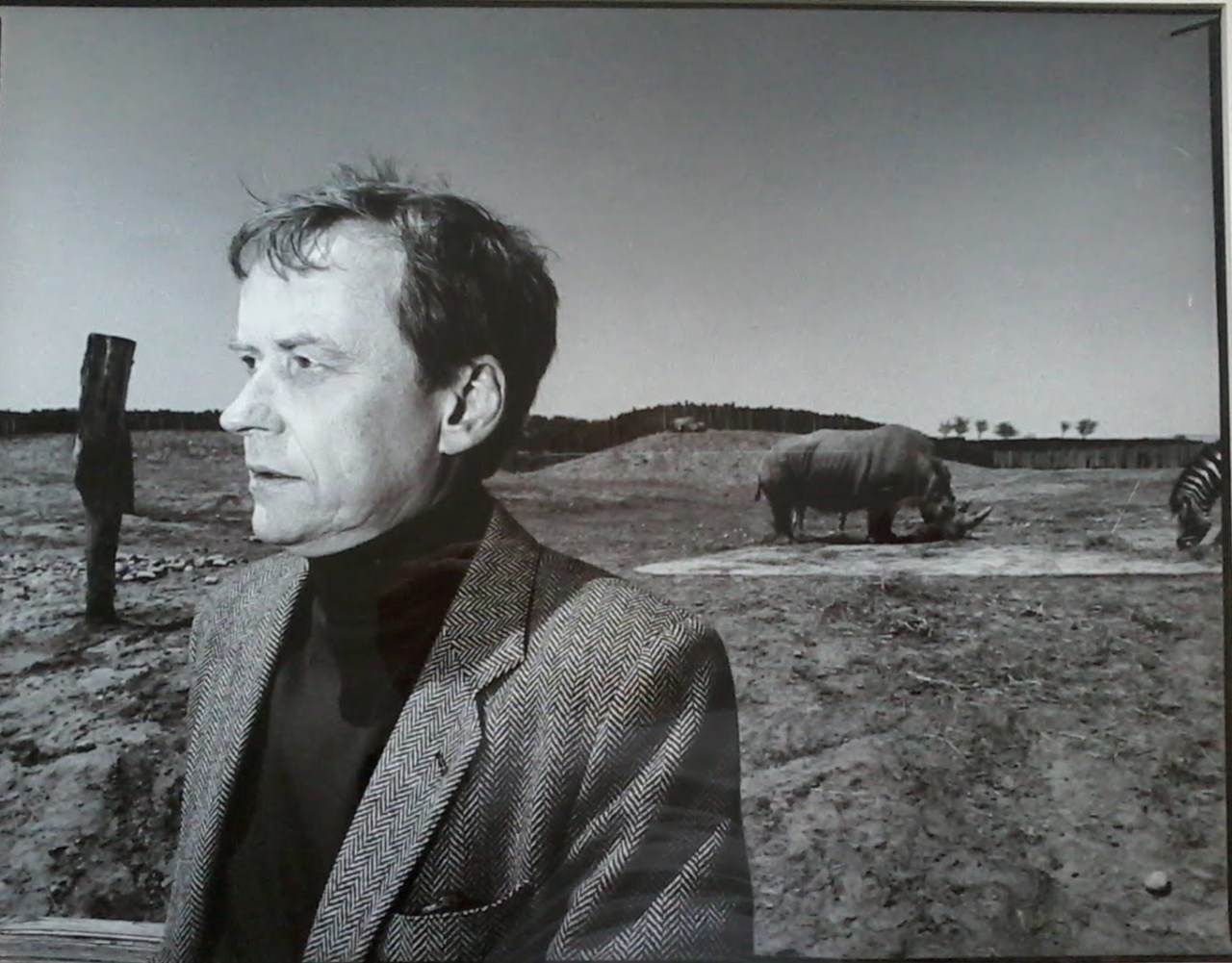
Photos courtesy of Pat Ferns: Richard Nielsen and Pat Ferns; Ferns at the CNEX Chinese Documentary Forum in Taiwan. Cover of the Sutherland House book






 susan walker's artsblog