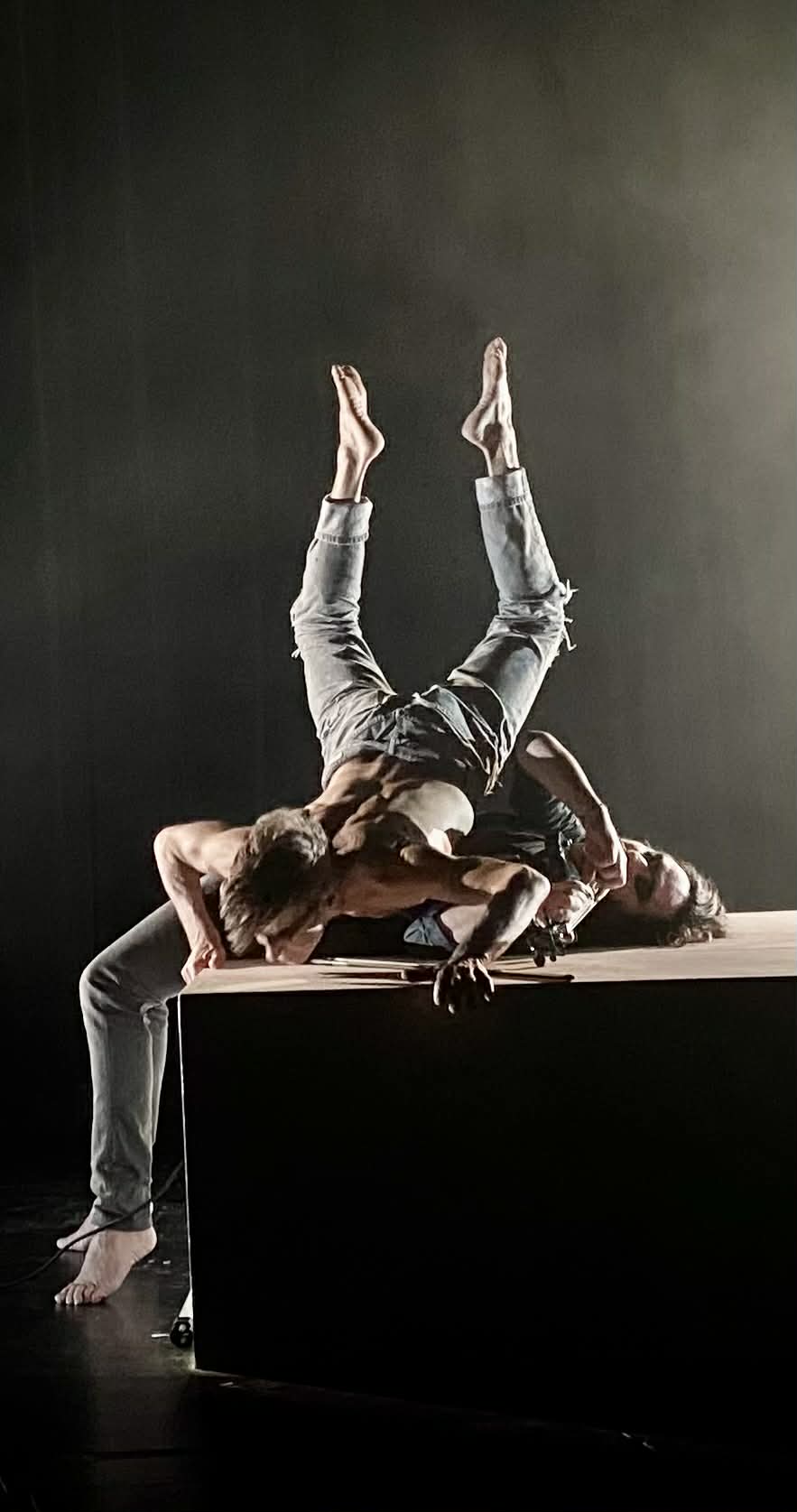
Procession is a triumph

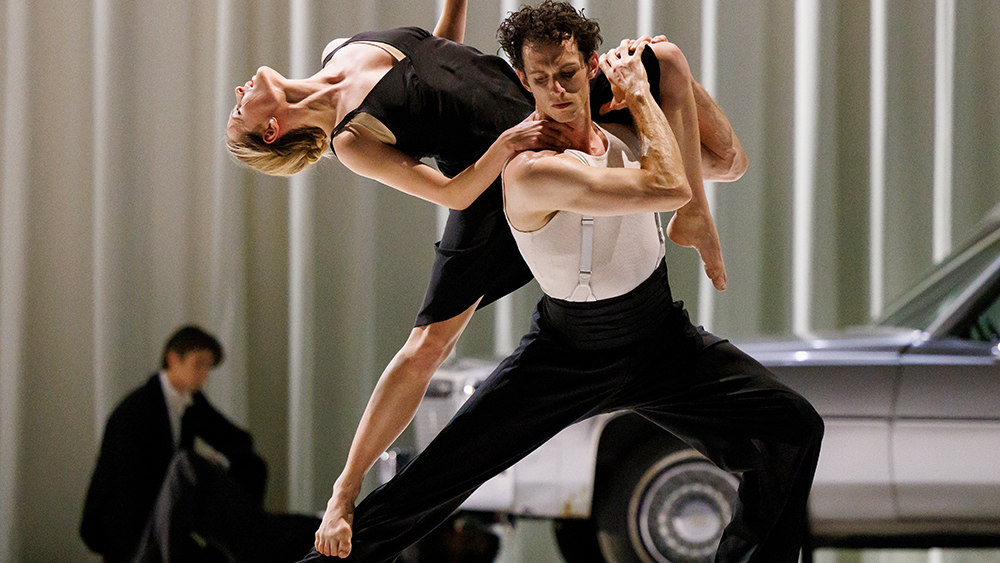
Just blocks away from the Rogers Centre where the Blue Jays were playing in top form in the final game of the World Series on Saturday night, the National Ballet of Canada offered up an equally thrilling performance with the world premiere of Procession.

Created on the company by choreographers Bobbi Jene Smith and Or Schraiber, Procession brings 32 dancers, a cellist and a soprano to the stage for a show that reinvents the story ballet in an extraordinary piece of theatre.

Both professional and life partners, Smith and Schraiber developed their craft as members of The Batsheva Dance Company under the leadership of Ohad Naharin. They are among the most sought-after creators in contemporary ballet and in commissioning this full-length work from them, NBoC artistic director Hope Muir was betting on a collaboration that would take the company to a new level of artistry.

And so it has. Procession will knock your socks off.

The curtains come up on an empty stage that is soon inhabited by a stately procession of dancers in evening dress, each costume designed by Dana Osborne unique to the individual wearing it. The music is mainly baroque – Purcell, Vivaldi, Rameau – arranged by Coleman Itzkoff in six movements for each of the two acts. Itzkoff also performs, joining the dancers on stage and playing cello in ways you’ve never seen it played before.

The music provides a strong framework within which the dance can move in unexpected directions, just as the elegant formal wear is loosened or removed as the dancers burst forth with a passion that upsets our expectations of sombre rituals. As does the presence of on stage of mezzo-soprano Rachel Wilson who at one point appears with a cigarette in one hand and a cocktail glass in the other.

Procession is all about the possibilities of imagining a world on stage, a journey on which anything might happen. Traditional forms are evoked, from the Jewish wedding dance, the hora, to the procession of ballerinas down a ramp in “La Bayadère,” to bits reminiscent of the dancey musical Grease.

Formality is juxtaposed against everyday actions as the dancers break out into trios or solos or pas de deux, then coalesce in grand ensemble moments.

By turns complex, witty, moving and demanding, Procession is like life itself. Not always easy to process, but profound. A kind of Canterbury Tales in dance.

Procession

Choreography by Bobbi Jene Smith and Or Schreiber

Performed by the National Ballet of Canada at the Four Seasons Centre for the Performing Arts in Toronto until November 8, 2025

Photo of Hannah Galway and Christopher Gerty by Bruce Zinger

Victoria dancer Patricia Sparks and the Royal Winnipeg Ballet at 85

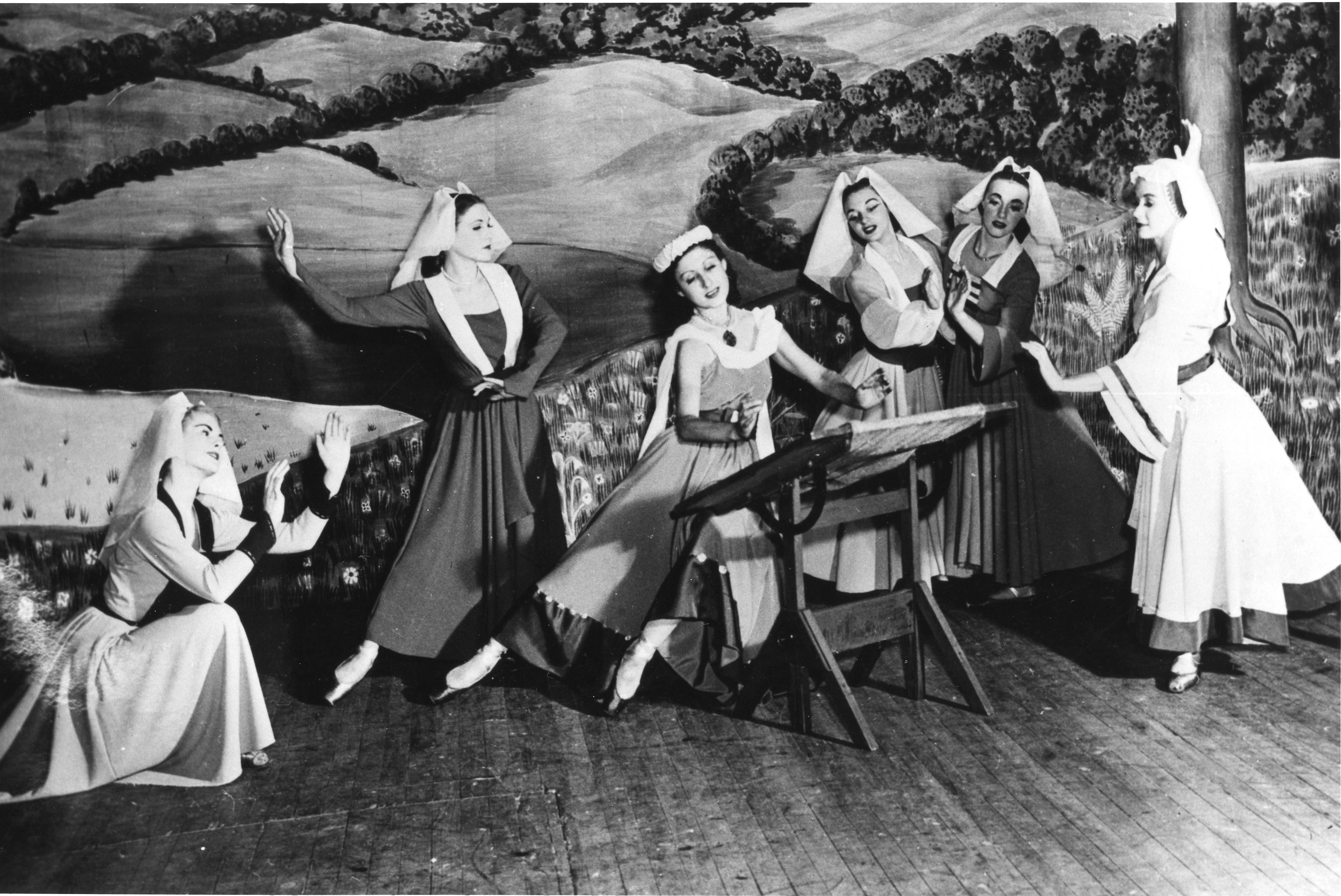
Patricia Sparks’ long career in ballet culminated with her recruitment into the Winnipeg Ballet and a command performance for Princess Elizabeth and Prince Philip in October 1951.

She was 20, and no neophyte. The Victoria native, now Pat Taylor, began dance lessons at age six. At 94, she still resides in Oak Bay, near the beach, keeps fit with tai chi and has total recall of her ballet training and performance. It all began with her mother’s friend and Pat’s godmother, Wynne Shaw, whose Victoria dance studio ran from 1941 to 1983.

“Wynne made up her own dances,” Pat recalls. “She wasn’t a dancer at all. Couldn’t demonstrate anything. But she was a phenomenal teacher.”  

It was through Miss Shaw that a 20-year-old Patricia Sparks was invited to join the Winnipeg Ballet. Shaw knew Gweneth Lloyd, co-founder of the company that earned its royal charter from Queen Elizabeth II in 1953. The Royal Winnipeg Ballet is this year marking its 85th anniversary.

Lloyd, an English ballet teacher and choreographer, arrived in Winnipeg with Betty Farrally, a former student of hers, in 1938. In 1939 they founded the Winnipeg Ballet, the oldest, continuously operating ballet company in North America. At the time when Sparks joined the company, Farrally was the ballet mistress.

In 1951, Pat Sparks, as she became known, Victor Duret and Beverley Ivings, all of Victoria, were among seven new dancers invited to join – in their case without auditioning — the Winnipeg Ballet. Another Victoria dancer, Bill McGrath, was already a member of the company. Sparks, Duret and Ivings were photographed for the Victoria Times, looking elegant with their suitcases, just before boarding a bus for Winnipeg.

“We got back there at the beginning of September,” says Pat, as if it was yesterday. “Our first performance was in front of Princess Elizabeth [a year before her coronation] and Prince Philip. It was the first thing we rehearsed for.”  After the show we were all introduced to them.”

The program consisted of Visages, Finishing School and The Wise Virgins, all choreographed by Lloyd, and Ballet Premier, created by Arnold Spohr. All 17 dancers performed for the royal couple. Jean Stoneham, who had danced with the Ottawa Ballet, was the star of the show. Pat recalls princess Elizabeth as stunningly beautiful. “They watched the first half of the program. After the show we were all introduced to them.”

For a still young and impressionable Pat Sparks, artistic director Arnold Spohr was a welcoming and encouraging figure. “He was a very kind man. On Christmas Eve, we out-of-towners were invited to his family home. It was the first time I had ever seen a Christmas tree with candles.” Spohr, whose heritage was German, “was a very tall man as were his brothers, all of them policemen.”

Among the dancers Pat met at the Winnipeg ballet was Hungarian-born Eva von Gencsy, who would later go on to co-found Les Ballets Jazz de Montreal.  “She was quite a character. I became really good friends with Eva and she would stay with me when in Victoria.”

Dancing professionally with a company on a shoestring budget was something of a challenge. “The costumes were already made. You either fitted into them or you didn’t. There was no money for adjustments.” And, for a young dancer from Victoria, dancing and touring in a harsh Canadian winter was an adventure of another kind.

“The first thing I did was buy a winter coat, a fur. In January 1952, we toured to Calgary. We took the train. I remember on the walk to the hotel. It was 60-below [Fahrenheit] with the windchill. We were billeted on the top floor of a house with a lovely lady. There were no cooking facilities, so we got a hotplate.”

Pat Sparks danced with RWB for two seasons, 1951 and 1952, but continued to perform after returning to Victoria, notably with Theatre Under the Stars, the musical theatre company that puts on shows to this day in Vancouver’s Stanley Park. “It was really fun,” she says. “We would rehearse all day in English Bay. Mostly, the old chestnuts.  Chu Chin Chow. The Merry Widow [as cancan girls] . . . waltzy kind of things, where we danced with the men.” One time, in a departure from routine, TUTS staged Brigadoon.

Once married to John Olsen, owner of The Strathcona Hotel, and later to Trevor Taylor, Pat is single and remains a participant in Victoria’s active dance scene. In 2016, she, along with some other volunteers and University of Victoria MA candidate Elizabeth Bassett and initiated the Dance Victoria Archives, an important record of professional dance on Vancouver Island. The archives document dancers such as Anna Marie Holmes and Patricia Sparks and renowned Victoria-born choreographer Crystal Pite.

The ballerina in Pat Sparks Taylor has not disappeared. She keeps moving and she keeps informed about the dance world. And she makes for fascinating conversation for anyone interested in Canadian ballet history.

Photos: Beverly Ivings, Kay Bird, Eva von Gencsy, Pat Sparks, Sheilagh Henderson and Viola Busday in Rondel 1951; Pat Sparks in costume for Finishing School; Pat Sparks Taylor at home.

Credits: Canada’s Royal Winnipeg Ballet Archives; Susan Walker

Dancing on the Edge keeps it fresh


Arguably, Noam Gagnon has been dancing on the edge ever since he started classes at Concordia University, where he had thought he might major in psychology. The Quebec-born dancer, choreographer and pilates instructor has no fear of risk: safe is not in his vocabulary except as a synonym for boring.  

Gagnon will be the opening show at the 37th Dancing on the Edge festival, June 12 to 21 at the Firehall Arts Centre and SFU Woodward’s in Vancouver. The longest running dance festival in Canada will this year feature 17 companies, making up an eclectic but intriguing program of the kind artistic producer and DOTE co-founder Donna Spencer has perfected over the years.

As anyone familiar with Holy Body Tattoo, the company formed by Gagnon, Dana Gingras and musician Jean-Yves Theriault in 1993 will know, edginess has long been a hallmark of Gagnon’s work in dance. It’s true, he says of Holy Body shows such as our brief eternity: “We left it on the floor. Physically, emotionally, in every way, we gave it our all.”

being is the title of the piece Gagnon is bringing to the festival. “I think everyone is going to be surprised. It took a turn,” he says of this solo, created in collaboration with musician Stefan Smulovitz and first performed two years ago.

The solo, he explains, was a driven by a physical language and emotional language that emerged in the creative process. This version, Gagnon says, “is more based on the maturity I have gained . . . Now there’s a different emotionality that goes with my being.”

Recognizing the honour in being chosen to open the festival, Gagnon had to ask himself whether he was delivering what the festival audience would expect with him. So he kept working and re-working, with lots of input from Smulovitz, who join Gagnon on stage, because, he says, “at the end of the day, I’m a showman.”

Newton Moraes, a Toronto performer and artistic director of the 25-year-old company, Newton Moraes Dance Theatre, performs in the second half on the opening mixed program with Gagnon (which repeats later in the festival). He’s a first-timer with Dancing on the Edge. Moraes, a native of Porto Alegre, Brazil, also started out with a different idea of what he career he might pursue before dance found him, especially after he moved to Canada.

Moraes is thrilled to have been programmed into this festival. “It means so much to be part of this incredible platform that celebrates powerful and innovative dance.” He’ll be performing a new solo called Dance Is Not My Hobby. A woman who was once a close friend challenged him one day by suggesting that dance was simply a hobby for Moraes. It’s not. “Dance is a vital expression of my identity. At 62 years old, as an LGBTQ man, I’m committed to continuing my performances.” His choreography has drawn on a “rich tapestry of influences,” including African Brazilian spirituality and many artists he admires. The solos, pays homage to some of those artists and to the late Robert Shirley, the partner who brought Moraes to Canada.

Donna Spencer is much admired by dancers and choreographers familiar with the festival. One of them is Serge Bennathan, the French-born dancer, choreographer, artistic director, painter and poet. A Vancouverite for a good part of the year, Bennathan says, “Ah oui. Dancing on the Edge holds a very special place in my heart.” Spencer invited him to perform in the first festival in 1988 when he’d only been in Vancouver for a few months. Dancing on the Edge, says Bennathan, introduced him to the West Coast dance community and has been a launching pad for many a dance artist.

Dance festivals in Canada have had a hard time staying alive. According to Spencer, who founded the festival with Esther Rausenberg and since the early 1990s has held the title of artistic producer, DOTE’s longevity is a function of “the need for its existence.” The festival has had to operate on a small budget so they have to keep overhead and administrative costs to a minimum to give as much of their funds as possible to the artists. “We believe in the artists and strive to raise their profile with every festival.”

One of the aims of Dancing on the Edge is to represent as much of Canada as possible. Jenn Edwards, performing The Centre of Time on June 18 and 19, has been based in Labrador since 2019. She grew up in Burnaby, BC, and came to dance and choreography from figure skating. Edwards spent some formative years of her career in Berlin and Vienna, so she too has absorbed influences from far and wide.

The Centre of Time, developed during a couple of residencies, is a world premiere. The piece came out of Edwards’s meditations on time as perceived through the moving body.  An important element of the piece is a film created by Brad Dillon that screens on a backdrop. “It was shot on a frozen lake — the temperature was minus 30 that day — using a video camera and a drone. I really like the otherworldly effect of that.” Dillon’s camera also captured the shadows cast by the dancers — Edwards and three others — to produce an effect where the dancers and their shadows are interacting.

Be sure to consult the full festival line-up at www.dancingontheedge.org  or if you want to be surprised and delighted, just turn up and see what you can see.

Dancing on the Edge

June 12 to 21

Firehall Arts Centre, SFU Woodward’s, Vancouver BC

www.dancingontheedge.org

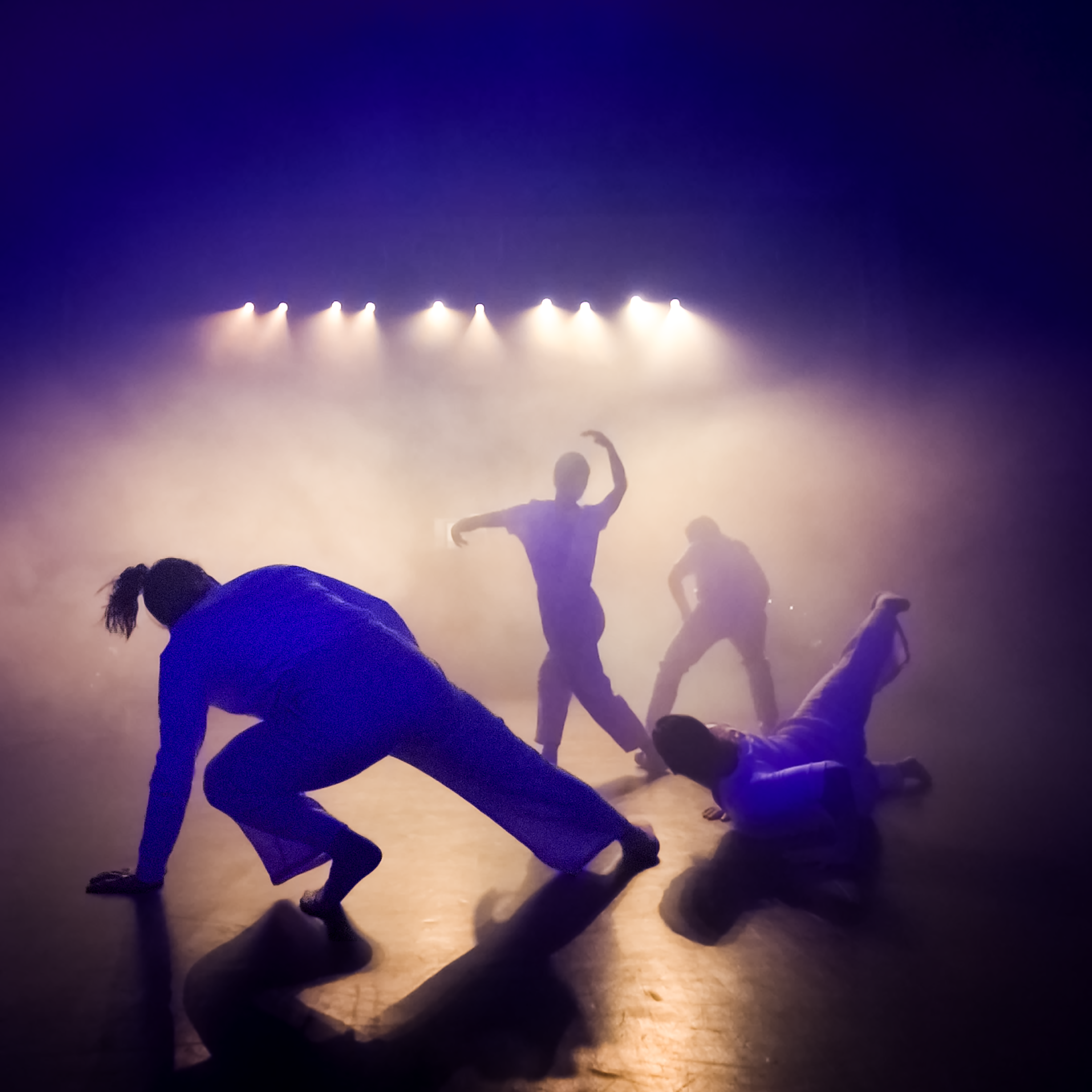
Photos, courtesy of the artists, clockwise: Newton Moraes/Dance Is Not My Hobby; Jenn Edwards/The Centre of Time; Noam Gagnon/being

The National Ballet of Canada is on a roll with Hope Muir

When the National Ballet of Canada opens its mixed program on May 30, a farewell to Guillaume Côté entitled Adieu, the company can expect record-breaking box office numbers. Such has been the effect of a rebrand that coincided with the 2022 appointment of Hope Muir as the Joan and Jerry Lozinski artistic director of the company.

A lot of development has occurred under her tenure, both for the company and for an expanding and diverse audience that has been invited to engage and challenge the dancers and choreographers.

On a chilly April morning, Muir, dressed for a long working day in casual clothes and no-nonsense running shoes, offers some background. After a career that has made her the most fully rounded artistic leader the company has ever seen, Muir has lost no time in re-shaping the company to ensure it can thrive and engage its audience as it approaches its 75th anniversary.

Changes she has introduced have been swift and effective. Following the pandemic, Muir had the opportunity to recruit dancers who have been with her from the beginning of her tenure. (“There was a lot of natural attrition and some key retirements.”) Today the average age of the performers is around 25, with an age range appropriate for a big classical company.

Developing new repertoire and reviving works such as next season’s Pinocchio, balancing the contemporary with the classical “legacy” ballets such as Swan Lake, has been at the forefront of what Muir sees as her mandate: to be a company that keeps the art form relevant and shows others the way forward.

The path to artistic directorship of a major ballet company has been quite intentional. Born in Toronto, Muir danced from a young age. Her formal training began at 15, when her mother’s work took her to London in the late 1980s. She was one of 10 out of 400 applicants accepted into the London Festival Ballet School. She first danced with the English National Ballet. Over her 17 years as a performer, Muir developed expertise in both classical and contemporary dance, performing with Rambert Dance Company and Hubbard Street Dance Chicago.

After retiring from dancing in 2006, she took on the job of rehearsal director and assistant artistic director for the Scottish Ballet, and in 2017 took over as artistic director of Charlotte Ballet, in Charlotte, North Carolina. Throughout this time, Muir worked with a range of choreographers and companies, including the National Ballet of Canada, where she staged Christopher Bruce’s Rooster in 2008 and assisting in the mounting of Crystal Pite’s Emergence in 2009.

Muir is well equipped to strike a balance between the classical and the contemporary and to find what excites both dancers and audiences. “What is interesting to me is the way classical and contemporary ballet support each other.” Both afford dancers an avenue to innovation. Dancers become part of the creative process in any given season, along the way developing new skills.  “If you make smart choices within a season, you’re giving dancers a chance to access the work. It’s quite visceral and the dancers are really engaged. That balance [between classical and contemporary] is what is giving us this momentum.”

Director of Marketing and Communications Belinda Bale has been working closely with Muir on the rebranding of the National Ballet. In 2022 the company hired Bruce Mau Design to conduct a process that was as much about attitude as about giving the company a new look. In consultation with all the stakeholders, from dancers to audience members to those with little awareness of professional dance, some key elements emerged. “The word ‘bold’ kept coming up,” Bale says. “And that’s very much Hope. She is bold and she is brave.”

Box office numbers tell the tale: with Muir’s first season in 2022-2023, the ticket sales returned to pre-pandemic levels, at $13.4 million. For the 2024-25 season, sales are on track to reach $16.4 million.

Since 2022, the company has performed a host of works that are either new or new for the National Ballet. Traditionally the mixed program has been a bit of a hard sell, but with the Winter mixed program this past February/March, a buzz of  excitement arose from what seemed like a packed house for a North American premiere of David Dawson’s The Four Seasons, a world premiere of Marco Goecke’s Morpheus’ Dream set to the music of Keith Jarrett and Lady Gaga, and a dynamic new staging of Antony Tudor’s The Leaves are Fading.

Muir herself says it’s an exciting moment to be at the helm of the National Ballet in the approach to the company’s 75th anniversary season in 2026-27. David Dawson, the Ballet’s resident choreographer for the next five years, will create a full-length work for the season, in what promises to be a very forward-looking celebration.

“It’s not just about acquisition,” says Muir of the works coming into the repertoire. “It’s about the creation as well. You’re giving the dancers a chance to access the work. What style, how much improv and how much acting: all of these things feed one another.”

As one of her bolder moves, Muir has introduced Sharing the Stage, a program to bring in prominent dancer/choreographers from outside the company to perform with them at the Four Seasons Centre. Tickets to the show on June 17 are only $20. Nova Dance will perform works by José Navas and Nova Bhattacharya and the National Ballet will present excerpts from Swan Lake and Jennifer Archibald’s new work, King’s Fall.

In the meantime, we have Adieu, a celebration of principal dancer and choreographic associate Guillaume Côté, who departs the company to work full-time with Côté Danse. From May 30 to June 5 he’ll perform in two of his own works, Grand Mirage and Bolero and company members will introduce Toronto-born Ethan Colango’s new work, Reverence, inspired by the Hieronymus Bosch painting The Garden of Earthly Delights

Photo of Hope Muir by Karolina Kuras

Citadel Dance Exchange offers a fair trade in exuberance

We all could use some exuberance in these troubled and angst-ridden times. A good place to find it is at the Citadel Dance Exchange, a Montreal-Toronto collaboration, now in its second week at the Citadel on Parliament Street in Toronto.

A joint initiative with The National Ballet of Canada’s Creative Action program, the exchange of dancers and choreographers from both cities has resulted in a high-octane show sure to get feet stomping, hands clapping and spirits rising. Catch the final performance Saturday April 12, at 8 pm.

Hair in pigtails, garbed in a shiny suit a size too big for him, back to his audience, Montreal’s Sovann Rochon-Prom Tep makes an inauspicious start to “Soft manners,” taking slow, sideways and back and forth steps toward a microphone stage front, where he turns to face the audience, a little bashfully, and begins to undress.

“Soft manners,” is an inward-looking solo that morphs through several costume changes, Tep peeling down to underpants at one point, to reveal a street performer of high caliber. This Montrealer whose breakdancing cred got him from the sidewalk to the stage, performing with Animals of Distinction and RUBBERBAND, knows how to engage an audience. During an interlude where he perches on a stool, microphone in hand, the dancer offers a little autobiography. Then, with escalating energy provided by a soundtrack of electronic beats and lounge-style music, he runs through a repertoire of moves from voguing to spinning on the floor, moving with style for the sheer joy of the dance.

Carol Anderson, a founding member of Toronto’s Dancemakers, a choreographer teacher and dance writer, set a memorable solo, “Elsinore/Soliloquies” on Julia Sasso in 1999. She has reworked the themes and images of the solo, expanding the dance into a work for four dancers, including Sasso, as sure-footed and emotionally expressive as ever. In this well rehearsed 18-minute piece, Toronto performers Sasso, Sully Malaeb Proulx, Katherine Semchuk and Natasha Poon Woo combine and recombine in muscular, gravity-defying duets, trios and a quartet, to the evocative classical-sounding strings of composer Kirk Elliott.

An accompanying poem and the sounds of waves washing on a pebbly shore or the crackling of a campfire, suggests that nothing is lost in dance. What was old can be reborn, reimagined on new bodies, captured fleetingly in timeless moving images.

In the 15-minute show closer, Toronto’s TUFF – The Unknown Floor Force – performs “Binary Codes.” Coming on strong and menacing in baggy pants and dark hoodies they brawl like a street gang. But, once stripped down to white undershirts, they turn collegial, but competitive, as a b-boy ensemble. Jayson Collantes, Mark Collantes, Keimar Russell-Farquarson and Bryce Taylor scrum like a rugby team, spin like tops and get the audience hooting and hollering to their beats like it was springtime on a basketball court.

Citadel Dance Exchange Week Two

Produced by Citadel + Compagnie in collaboration with the National Ballet of Canada Creative Action program

At the Ross Centre for Dance, Toronto, until Saturday, April 12, 2025

Photo of Natasha Poon Woo, Julia Sasso and Sully Malaeb Proulx by Drew Berry

A Swan Lake for the ages

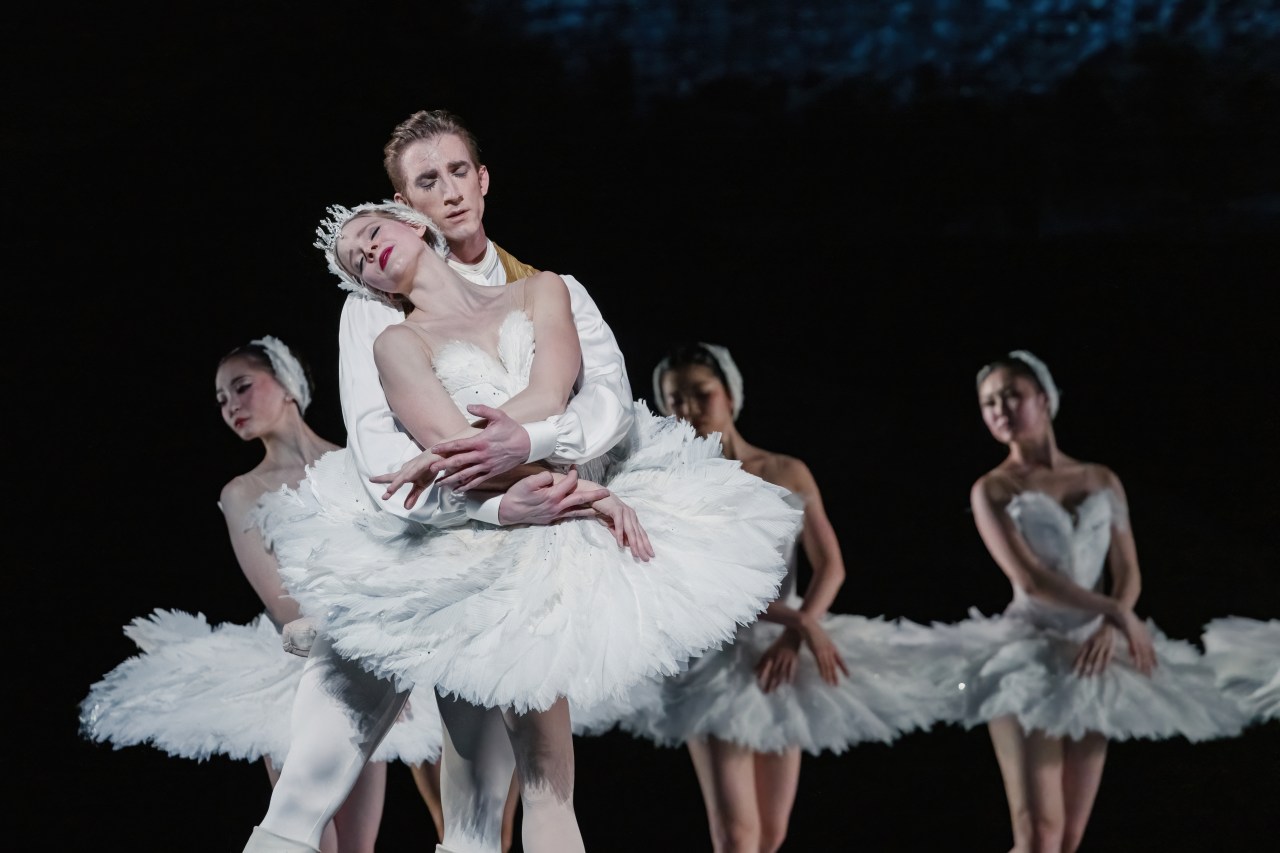
Karen Kain, then the outgoing artistic director of the National Ballet of Canada, set herself a tall order when she determined to re-stage the Erik Bruhn 1966 production of Swan Lake. Premiering in 2022, this new edition of the Tchaikovsky classic, directed by Kain, with new choreographic invention from her, Christopher Stowell and Robert Binet, brings the 1895 story ballet by Marius Petipa and Lev Ivanov, into the 21st century.

And if it is wall-to-wall bravura dancing you’re looking for, this is the crowd-pleasing-est ballet you are ever likely to see, performed with precision by 50 dancers of the NBoC.  That is exactly what any ballet company needs and what Kain and her team have delivered. The Swan Lake run was entirely sold out before it opened.

Gabriela Týlešová’s lavish set, props and costumes and Bonnie Beecher’s inventive lighting design ensure that this Swan Lake enchants as it should. (Check out the 1966 film of the Bruhn Swan Lake on YouTube if you want to see what a museum piece looks like.)

Any Swan Lake demands a flawless technique and plenty of stamina and this one, with its relentless pace, perhaps more others. Just ask Heather Ogden, who will dance her seasoned Odette/Odile for the last time March 15, 18 and 21.

Among the human touches brought to this production is a brief, ghostly prologue showing the young women dancing in a forest glade before stumbling into the clutches of the bewitching Baron Rothbart, who turns them all into swans. The giant, feathery, scene-stealing wings symbolize his power over human happiness. Second soloist Peng Fei Jiang makes a haunting Rothbart who moves with beautiful cunning to envelope all who approach him in his spell. Odette is his chief prize and it is she who reverts to human at night, when Prince Siegfried encounters her, setting aside his crossbow to learn of the curse of Rothbart. Only Siegfried’s vow of undying love can release Odette from swanhood.

Genevieve Penn Nabity, a sparkling Odette, captivates both Ben Rudisin’s noble Siegfried and the audience, agog at Swan Lake’s famous feats, such as her 32-fouettées in Odette’s dance or the Act II pas de deux with Siegfried.  Ben Rudisin, understandably a little jittery in an opening night performance he wasn’t originally scheduled for, has the grace, the stature and the physical talent for the part of a prince under pressure from his mother to marry. Nuances indicating thoughts and feelings will come later. Veteran character dancer Stephanie Hutchison makes an appropriately stately yet fiery presence, insisting on her gloomy son’s need to find a wife.

First soloist Donald Thom, in the powerful supporting role of Siegfried’s close friend Benno, gave the most animated and expressive showing of the evening. Kain told her principal dancers to put something of themselves into the characters and once they’ve mastered the steps most ballerinas and male dancers do just that.

The big set pieces of Swan Lake, such as the linked-armed dance of the little swans put this viewer in mind of ballet competitions past, and tend to dispel any thoughts of romance, character development or the arc of tragedy that is Swan Lake. In the end, drama is subsumed by the Tchaikovsky score and finesse of Russian classical ballet.

Not to worry, as this production develops, the dancers will grow with it. In the meantime, better catch experienced tragedians Heather Ogden and Harrison James before this show closes on March 22.

Swan Lake

Directed and staged by Karen Kain; choreographed by Kain, Christopher Stowell and Robert Binet after Erik Bruhn, Lev Ivanov and Marius Petipa

At the Four Seasons Centre for the Performing Arts in Toronto until March 22, 2025

Photo of Genevieve Penn Nabity and Ben Rudisin with artists of the Ballet in Swan Lake by Karolina Kuras.

Fall for Dance North: 10 years of many more hits than misses

News flash: Company Wayne McGregor will perform Autobiography V88 + V99, as the renowned British contemporary troupe makes its first ever appearance in Canada, October 1 and 2 in the at The Creative School Chrysalis (the former Ryerson theatre) for the rock-bottom price of $25 for all seats.

The event is sure to make many newcomers fall for dance, a chief mandate for Fall for Dance North, subtitled “Toronto’s Premier International Dance Festival.” The 10th anniversary edition of FFDN, with performances running from September 26 to October 6 in multiple venues, makes a suitably grand swan song for founding artistic director Ilter Ibrahimof. 

Ibrahimof passes on the leadership of the festival to co-CEOs Lily Sutherland and Robert Binet, as he leaves a record of success that includes launching works encompassing more than 30 dance forms, including hip hop, professional folk dancing, Indigenous dance, several kinds of Indian classical dance, even ballroom and social dance. In the process he  has annually commissioned work from renowned creators such as Peggy Baker, Aszure Barton, Anne Plamondon, and Mthuthuzeli November and hosted big-name companies from abroad, including Alvin Ailey American Dance Theatre, Brazil’s Grupo Corpo, Compagnie Hervé KOUBI from France, Nederlands Dans Theater and Israel’s Batsheva Dance Company. 

Under Ibrahimof’s direction, FFDN has attracted audiences in the tens of thousands to experience dance in TO. He leaves the city for a new home in Porto, Portugal. The move is a chance, he says, to be closer to his family in Istanbul and to take a rest for a while, becoming a dance consultant.

Lily Sutherland, the new co-CEO of FFDN will hold the role of festival director, a job she’s well prepared for. Coming out of a theatre background, she has worked with Luminato, The Toronto Fringe Festival and The Hamilton Festival Theatre Company. She joined the FFDN creative team in 2018 and is currently the fest’s executive producer. She and Binet officially take over November 4.

Choreographer, curator and ballet mentor Robert Binet, maker of many works for the National Ballet of Canada, the Royal Ballet and New York City Ballet among other companies, will be leaving a role he’s held since 2013 as director of artist development and choreographic associate at the NBoC to take up the post of co-CEO and artistic director.

The two CEOs already appear to be a good partnership. Says Binet, “We want to use the natural connections that dance has to other art forms, such as music, theatre and the visual arts to get people who love those forms to see that dance engages the same parts of our brain.”

Sutherland and Binet share a passion for getting more bums in seats or other ways of engaging, including actually dancing themselves. “For some people, coming and sitting in the dark with your phone off for two and a half hours is a blissful experience and for others, it can be a bit alienating and uncomfortable. The festival offers such people a chance to meet dancers on their own terms,” Binet notes.

Here’s a punter’s guide to 2024’s Fall for Dance North, September 26 to October 6. For complete details on performances, the International Presenters Program, free workshops, dates and venues, go to Home | Fall For Dance North (ffdnorth.com).

Homecoming: the 2024 Signature Programme: Ilter Ibrahimof has chosen to showcase three female choreographers whose work has been advanced through their participation in FFDN. The three-act program opens with Havana’s  Malapaosoa Dance Company performing The Last Song (La Última Canción), choreographed by Daile Carrazano. The piece was developed in a creative partnership between Toronto Metropolitan University’s Creative School and the FFDN. Act II brings the National Ballet of Canada back to the FFDN stage for the first time since 2019, with islands, choreographed by Emma Portner and first staged at FFDN in 2018. Two of NBoC’s ballerinas will perform islands. Ballet Edmonton returns to the FFDN stage in Act III with the world premiere of the festival’s inaugural artist-in-residence Anne Plamondon ensemble piece Feel no more set to the live music of Zach Frampton. September 26-27 in the Creative School Chrysalis at 7:30 pm.

Tkaronto Open II is a competition designed to celebrate Indigenous culture and showmanship among local Indigenous dancers. Contestant registration is $25, but the event is free to watch on September 28 at Union Station TD Carriageway, starting at 12 pm.

Studio 24 / Celebrating a Decade of FFDN. An evening to honour departing director Ilter Ibrahimof will feature performances by Nederlands Dans Theater,Malpaso Dance Company, Lady C & Raoul Wilke and a world premiere by Peggy Baker. The fundraiser VIP tickets include a cocktail reception, gala performances, followed by a catered dinner and disco dancing on stage with DJ Andrew Tay. Drinks and dinner at $300 (qualifying for a $180 tax receipt). A limited block of tickets at $75 each gets you into the performances, dinner and disco. Saturday September 28 at 6:00 pm in the Betty Oliphant Theatre.

Photos: from left, Ballet Edmonton’s Feel no more, by Nancy Price. Company Wayne McGregor in Autobiography, by Ravi Deepres.

Nova Dance animates shared sites

Starting out as a seven-year-old training intensely as a new Canadian in the classical Indian dance form Bharatnatyam to staging a cross-cultural activation of a historic site in Toronto may seem like an unlikely journey. But not if you are Nova Bhattacharya.

From Thursday through Saturday this week, Nova Dance presents Offerings at Ishpadinaa, a free outdoor show that like so many of Bhattacharya’s projects almost defies categorization. She and her dancers, her co-creators, invite you to “to witness reclamations of resistance and joy” at 285 Spadina Road, site of the Spadina Museum, formerly the mansion of financier James Austin, who purchased the land on the ridge in 1866.

Bhattacharya talks about “listening to the land” and the conversations  that went on –among the performers and creators, including dramaturge Dainty Smith, Thrasher, research intern Mushtari Afroz, Neena Jayarajan, composer/percussionist Dhaivat Jani, Ravyn Wngz, Candace Kumar and herself — as a truth and reconciliation process. But not just between Indigenous peoples and everyone else, but among all who have experienced colonialism and its attendant suppression of cultures.

Dance, the universal language, as she points out, is a way to not just be on the earth together, but an act of unearthing long ago uses of the land. “The Mississaugas of the Credit River used have gatherings there,” says Bhattacharya. The space is also associated with the arrival of immigrant populations, including African Americans, and of course with the British colonial administration of Upper Canada.

A dancer, choreographer and teacher, Bhattacharya recalls the dawning of her awareness of a common colonial past from an early childhood visit to Kolkata (Calcutta) where her family came from. “The architecture that I saw there was very similar to the architecture I saw in Canada,” in Halifax, where she was born and Toronto where she grew up. Because of course the buildings all bore the stamp of the British Empire.

Nova Dance is enjoying a year of performing in public spaces. In July at Quebec’s Furies contemporary dance festival in the Haute-Gaspésie region, Bhattacharya gave two performances of her solo Love Becomes Her on the shores of the St. Lawrence River – at 10 o’clock in the morning. Nothing says rooted more than dancing in a wet, rocky shoreline.

She says her 10 years of Butoh training is coming to the fore in such performances. Next up is a work that will take place around the Colonial Building in St. John’s Newfoundland, where she was teaching last year. The physical act of walking the steep inclines of the city was inspiring, in the feedback it was giving her body. As she explored the history of the buildings, she learned that the city  had entered into conversations with the Indigenous communities who insisted on keeping the name, “because it’s the truth. That’s what truth and reconciliation is about.”

Having become an independent dancer at 16 and forming Nova Dance in 2008, Bhattacharya has covered a lot of ground and earned labels from bad-ass to boundary-breaking. It seems she was born to explore, experiment and collaborate. From her early days dancing with fellow students of Menaka Thakkar, she was investigating other contemporary forms.

She began choreographing in 1997 and was soon performing with Peggy Baker Dance Projects, Compagnie Flak and Fujiwara Dance Inventions. The late Tedd Robinson created wonderful pieces for Nova Dance. As a choreographer Bhattacharya made ground-breaking dances in collaboration with Louis Laberge-Côté, among others. And how do these collaborations across disparate, dance disciplines work, one asks. “Dance is the first language, in a way. It’s gesture. If we really communicate with each other, from a place of parity and respect for each other, it’s absolutely possible to get to a cohesive artistic expression.”

In that regard it’s possible to see Svāhā! her epic piece for 22 dancers first performed in 2021 as a culmination of all that Nova Dance has been striving for. The work embodies 29 dance forms and is a realization of dance as story, ritual and transformation. But it is certainly not the finale for Nova Dance.

Offerings at Ishpadinaa

Produced by Nova Dance

5:30 to 6:30 pm, August 29 through 31, 2024

285 Spadina Rd, Toronto

Free admission

Photo of Nova Bhattacharya by Jack Udashkin

Hamlet, a tragedy in dance

Stripped of its nearly 30,000-word text, William Shakespeare’s The Tragedy of Hamlet, the Prince of Denmark, becomes, in the hands of director Robert Lepage and choreographer/dancer Guillaume Côté, something more akin to an expressionistic painting than a spoken word performance.

Once awakened from his melancholic brooding as the curtain goes up, Côté’s Hamlet is never still again, his inner turmoil made manifest in powerful, athletic dance, driven by John Gzowski’s relentless, evocative, recorded score. This Hamlet is all passion, all action, eschewing narrative for character-driven dance arrangements on a sparsely furnished set where Simon Rossiter’s lighting design animates ever-moving curtains and billowing silks to make a drama that keeps one very much in the present, as only dance can do.

Côté may be the central character, but he doesn’t hog all the best moves. From the opening scene with Hamlet’s friend and supporter Horatio – a brilliantly cast and frightfully nimble Natasha Poon Woon – through emotional scenes between Claudius (veteran Robert Glumbek, who shows an aptitude for classical acting) and Greta Hodgkinson’s stately yet extroverted Gertrude, to the final scenes of violent swordplay, this 100-minute, intermission-less show keeps up the momentum.

Structured as a series of scenes that open with surtitled, white-lettered phrases, à la a 1920s silent movie, this Hamlet is more pastiche than episodic, lightening the mood when the intensity builds to a breaking-point with some humorous mask work, when the players arrive to re-enact the murder of Hamlet’s father. Lepage and Côté have selected elements of Shakespeare’s play most conducive to dance interpretation, including scenes such as Ophelia’s drowning, memorably performed by Carleen Zouboules who is manipulated from underneath a turquoise watery silk, that do not occur in the stage play.

Cast as Polonius, the multi-talented Bernard Meney also performs an expanded role as  Ophelia’s father, as ever so subtly, the show touches on the oedipal elements between sons and mothers, fathers and daughters. Connor Mitton as Rosencrantz and Willem Sadler as Guildenstern likewise see much more on-stage action than Shakespeare gave them.

One hopes that this short run at Toronto’s Elgin Theatre will not be the last for this danced through Hamlet, for it is the kind of show that will only get better with each lightning performance.

The Tragedy of Hamlet, Prince of Denmark

Designed and directed by Robert Lepage

Co-designed and choreographed by Guillaume Côté

Based on the play by William Shakespeare

Produced by Ex Machina/Côté Danse/Dvoretsky Productions

At the Elgin Theatre, Toronto through April 7, 2024.

Photo of Guillaume Côté and Carleen Zouboules courtesy of Show One Productions

Gallery

National Ballet’s Winter Triple Bill heats up the hearts of balletomanes

No matter what one’s taste in ballet, one can be assured of an evening of wall-to-wall, bravura dancing at the National Ballet of Canada’s Winter Triple Bill, running at the Four Seasons Centre for the Performing Arts until March 24.

For those with a craving for the cutting edge in dance, there’s William Yong’s UtopiVerse, a dreamy, multimedia spectacle performed by 25 or more National Ballet dancers. Yong, a Hong-Kong-born dancer, choreographer, dance filmmaker, designer and artistic director of Zata Omm Dance Projects and W Zento Production, arrived in Toronto – via studies and performing in London, England – in 1999. A commission from artistic director Hope Muir to make a piece for the National Ballet, has been a huge opportunity for this multi-faceted artist to think big and make ample use of the finest single group of dancers in the country.

And think big he has, for UtopiVerse is a high-concept feast for the senses, involving huge moving and mesmerizing projections, a resounding, evocative score consisting of excerpts from violin works by Benjamin Britten (with additional music from composer Constantine Caravassilis), and an enormous, glowing glass circle that rises and lowers over the dancers, sometimes enclosing them, sometimes quite ominously.

Mystery and ambiguity abound in UtopiVerse, intended, Yong has said, to be “a visually stimulating playground, where the quest for an ideal and alternative universe takes centre stage.” Bits of Yong’s symbolism send mixed signals, such as the black, wide-brimmed hat worn by The Daemon, (a commanding Christopher Gerty), which to viewers of a certain age, conjures up that TV hero of the 1950s, Zorro.

Koto Ishihara as Lotus and Ben Rudisin as Leo lead a dynamic cast on a wandering narrative set out in sinuous contemporary ballet moves. The dancers – questing strangers in a strange land dressed in flesh-coloured leotards, with shoulder armor and outlined spinal columns to make them look other-worldly – are at times overwhelmed by giant projections of themselves and by the constantly swirling, expanding and transforming white forms etched on the scrim behind them.

But is that not the point? Humans, depicted here as energetic, curious seekers, partnering and re-partnering, are but specks on the surface of a planet that is itself a microdot in our ever-expanding notions of the cosmos we inhabit.

In setting out to create any new dance, Ottawa-born, internationally renowned choreographer Emma Portner asks herself, “What have I not seen in the world?”  Such was the conception for islands, a fascinatingly complex duet for two women made for and premiered by the Norwegian Opera & Ballet in March 2020.

In the National Ballet’s North American premiere of islands, Heather Ogden and Emma Ouellet made an extraordinary duo in a sculptural, ever-evolving partnership, in which they define their own performance space as well as a new physics of women partnering each other. Portner has reimagined the ballerina role without the tutu, a costume that keeps women at a four-foot distance apart from one another. In islands, she puts her dancers in the same pair of pants, so that for the first half of the 20-minute performance, Ogden and Ouellet appeared not so much a pair of conjoined twins, but as one unified creature, limbs intertwining and unwinding in a technique called threading.

Out of the pants, the women can lift one another or leap into the air just as well as any male dancer, shaping the space around them with the imaginative soundscape: excerpts from haunting music by Brambles, Guillaume Ferran, Forest Swords, Lily Konigsberg and Bing & Ruth. Yet islands is not so much a statement of queer identity as it is a demonstration of giving ballerinas their own agency in the context of a dance form traditionally directed by men.

As a closer to the triple bill, nothing could please a classical ballet purist better than the National Ballet’s Canadian premiere of Serge Lifar’s Suite en Blanc from 1943, staged by Charles Jude and Stéphanie Roublot Jude.

From the opening tableau with the all-white costumed dancers ranged on black elevations like sculptures about to be set in motion, Suite en Blanc is an homage the étude, a classical ballet tradition akin to a competition. With unmatched precision and a joyful savoir faire, the dancers perform to Édouard Lalo’s 1882 Suite from Namouna to thrilled applause. On opening night, Isabella Kinch in the Sérénade section, Koto Ishihara in Presto, Spencer Hack in Mazurka and Svetlana Lunkina, with and without partner Harrison James, were especially impressive.

UtopiVerse

Choreography by William Yong

Music of Benjamin Britten with compositions of Constantine Caravassilis

Set and costumes by William Yong

Lighting design Noah Feaver

Projection design Thomas Payette / Mirari

Islands

Choreography by Emma Portner

Music by Brambles, Guillaume Ferran, Forest Swords, Lily Konigsberg, Bing & Ruth

Costumes by Martin Dauchez

Lighting by Paul Vidar Sævarang

Suite en Blanc

Choreography and music arrangement by Serge Lifar

Music by Édouard Lalo

Costumes adapted by the NBoC wardrobe department under supervision of Stacy Dimitropoulos

Lighting adapted by Jeff Logue

A production of the National Ballet of Canada at the Four Seasons Centre for the Performing Arts until March 24, 2024

Photos by Karolina Kuras, clockwise: Koto Ishihara, Ben Rudisin and artists of the National Ballet in UtopiVerse; Emma Ouellet and Heather Ogden in islands; Monika Haczkiewicz, Tene Ward and Chelsy Meiss in Suite en Blanc