Fall for Dance North: 10 years of many more hits than misses

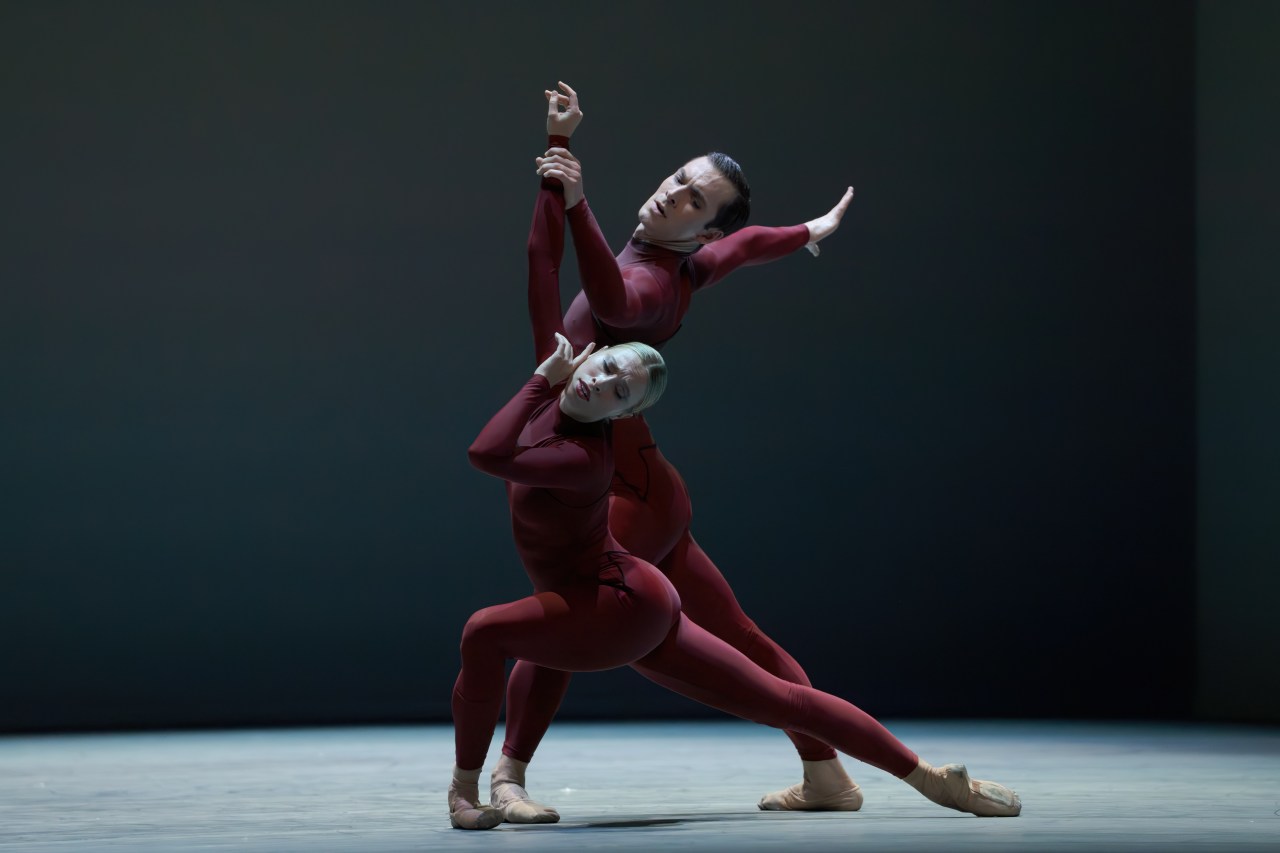
News flash: Company Wayne McGregor will perform Autobiography V88 + V99, as the renowned British contemporary troupe makes its first ever appearance in Canada, October 1 and 2 in the at The Creative School Chrysalis (the former Ryerson theatre) for the rock-bottom price of $25 for all seats.

The event is sure to make many newcomers fall for dance, a chief mandate for Fall for Dance North, subtitled “Toronto’s Premier International Dance Festival.” The 10th anniversary edition of FFDN, with performances running from September 26 to October 6 in multiple venues, makes a suitably grand swan song for founding artistic director Ilter Ibrahimof. 

Ibrahimof passes on the leadership of the festival to co-CEOs Lily Sutherland and Robert Binet, as he leaves a record of success that includes launching works encompassing more than 30 dance forms, including hip hop, professional folk dancing, Indigenous dance, several kinds of Indian classical dance, even ballroom and social dance. In the process he  has annually commissioned work from renowned creators such as Peggy Baker, Aszure Barton, Anne Plamondon, and Mthuthuzeli November and hosted big-name companies from abroad, including Alvin Ailey American Dance Theatre, Brazil’s Grupo Corpo, Compagnie Hervé KOUBI from France, Nederlands Dans Theater and Israel’s Batsheva Dance Company. 

Under Ibrahimof’s direction, FFDN has attracted audiences in the tens of thousands to experience dance in TO. He leaves the city for a new home in Porto, Portugal. The move is a chance, he says, to be closer to his family in Istanbul and to take a rest for a while, becoming a dance consultant.

Lily Sutherland, the new co-CEO of FFDN will hold the role of festival director, a job she’s well prepared for. Coming out of a theatre background, she has worked with Luminato, The Toronto Fringe Festival and The Hamilton Festival Theatre Company. She joined the FFDN creative team in 2018 and is currently the fest’s executive producer. She and Binet officially take over November 4.

Choreographer, curator and ballet mentor Robert Binet, maker of many works for the National Ballet of Canada, the Royal Ballet and New York City Ballet among other companies, will be leaving a role he’s held since 2013 as director of artist development and choreographic associate at the NBoC to take up the post of co-CEO and artistic director.

The two CEOs already appear to be a good partnership. Says Binet, “We want to use the natural connections that dance has to other art forms, such as music, theatre and the visual arts to get people who love those forms to see that dance engages the same parts of our brain.”

Sutherland and Binet share a passion for getting more bums in seats or other ways of engaging, including actually dancing themselves. “For some people, coming and sitting in the dark with your phone off for two and a half hours is a blissful experience and for others, it can be a bit alienating and uncomfortable. The festival offers such people a chance to meet dancers on their own terms,” Binet notes.

Here’s a punter’s guide to 2024’s Fall for Dance North, September 26 to October 6. For complete details on performances, the International Presenters Program, free workshops, dates and venues, go to Home | Fall For Dance North (ffdnorth.com).

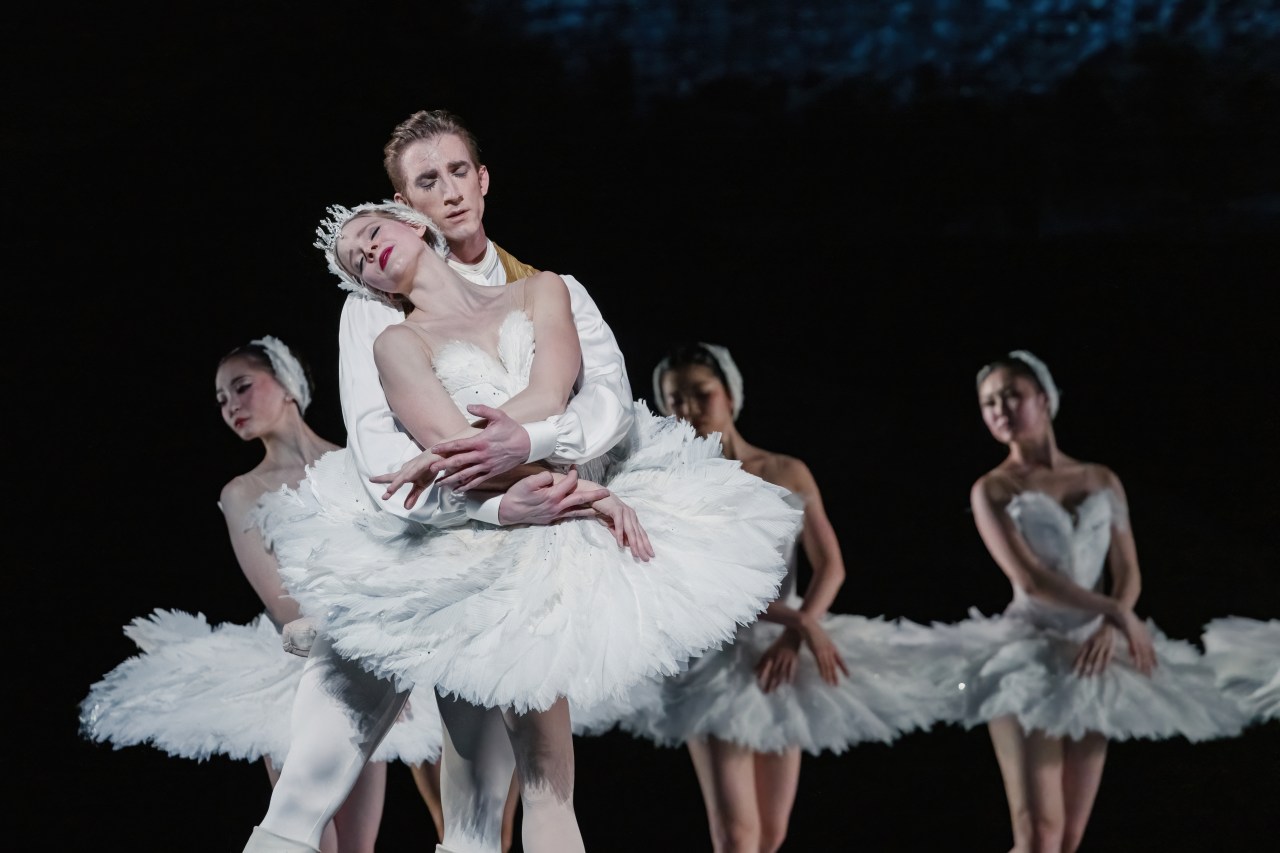
Homecoming: the 2024 Signature Programme: Ilter Ibrahimof has chosen to showcase three female choreographers whose work has been advanced through their participation in FFDN. The three-act program opens with Havana’s  Malapaosoa Dance Company performing The Last Song (La Última Canción), choreographed by Daile Carrazano. The piece was developed in a creative partnership between Toronto Metropolitan University’s Creative School and the FFDN. Act II brings the National Ballet of Canada back to the FFDN stage for the first time since 2019, with islands, choreographed by Emma Portner and first staged at FFDN in 2018. Two of NBoC’s ballerinas will perform islands. Ballet Edmonton returns to the FFDN stage in Act III with the world premiere of the festival’s inaugural artist-in-residence Anne Plamondon ensemble piece Feel no more set to the live music of Zach Frampton. September 26-27 in the Creative School Chrysalis at 7:30 pm.

Tkaronto Open II is a competition designed to celebrate Indigenous culture and showmanship among local Indigenous dancers. Contestant registration is $25, but the event is free to watch on September 28 at Union Station TD Carriageway, starting at 12 pm.

Studio 24 / Celebrating a Decade of FFDN. An evening to honour departing director Ilter Ibrahimof will feature performances by Nederlands Dans Theater,Malpaso Dance Company, Lady C & Raoul Wilke and a world premiere by Peggy Baker. The fundraiser VIP tickets include a cocktail reception, gala performances, followed by a catered dinner and disco dancing on stage with DJ Andrew Tay. Drinks and dinner at $300 (qualifying for a $180 tax receipt). A limited block of tickets at $75 each gets you into the performances, dinner and disco. Saturday September 28 at 6:00 pm in the Betty Oliphant Theatre.

Photos: from left, Ballet Edmonton’s Feel no more, by Nancy Price. Company Wayne McGregor in Autobiography, by Ravi Deepres.

Gallery

East merges with West in Mukashi Mukashi, to hilarious effect

Once upon a time, David Danzon, the peripatetic artistic director of Corpus Dance Projects, decided to embrace Japanese theatrical traditions to come up with a cross-cultural contemporary fairy tale.

After touring shows through Japan, Corpus partnered up with Osaka’s 53-year-old Kio theatre company to co-produce  Mukashi Mukashi, a contemporary interpretation of two characters central to European and Japanese folklore: the wolf and the crane, respectively.

The kid-friendly show, launched at a festival in Japan last October is playing now, for its first North American run, at the Theatre Centre in Toronto, until Sunday, September 29.

Mukashi Mukashi is a madcap mash-up of physical theatre from two distinctly different cultures. Corpus and Kio found their theatrical modus operandi quite compatible. Danzon worked with the Kio company to incorporate Kabuki, Noh, Bunraku (body puppetry) and Kyogen (the comic interludes between acts in a Noh play) into the Corpus brand of physical theatre. He layers these expressive movements, scene by scene, to create a melding of human and animal, as any good fairy tale would. The skills on display here revolve rapidly through mime, to dance, puppetry, mask, clown, live origami-making, Asian shadow puppetry, to a manic, sequin-jacketed TV game-show host — all accompanied by Anika Johnson’s evocative  soundscape.

By turns hilarious and thought-provoking, Mukashi Mukashi proceeds  through a series of nine short scenes, the performers speaking mainly Japanese, with a few lines of English thrown in. There is not a lot of dialogue, but English and French surtitles, white on black panels, spark memories of the talk panels in the silent films of Buster Keaton or Charlie Chaplin, early influences on Danzon’s comedic practice. The dream-like sequence follows an arc from mortal danger through comical transformations, to peace and fulfilment, tapping deep into the collective unconscious.

In The Uses of Enchantment (1976) child psychologist Bruno Bettelheim famously argued that the violence and fantastical nature of traditional fairy tales were not to be shunned in favour of anodyne realist children’s literature, because stories such as Little Red Riding Hood cathartically deal with primal fears and lead to healthy childhood psychological development. Mukashi Mukashi is enchantment at its best.

Guffaws greet the opening scene, as performers Sakura Korin, Kio artistic director Kohey Nakadachi, Takako Segawa and Kaitlin Torrance arrive on stage, costumed by designer Atsuko Kiyokawa, in black tights with big bushy  wolf tails. They are soon howling at the moon overhead and with the next scene we’re plunged into the fantastic, as Nakadachi in a wolf headpiece morphs from the big bad wolf to little red riding hood being tantalized by Mr. Wolf, to later hilarious scenes when he’s begging for sympathy from little red riding-hood. Mr. Wolf’s funeral ushers in scenes involving the performers making origami paper cranes – in one case screwing up, prompting a live demonstration of how to make a paper crane.

The crane is a powerful symbol in Japanese culture. Considered mystical creatures who may have lived for eons, they are thought to bring luck and prosperity, peace and hope. A paper crane may be gifted as an emblem of honour. The wings of the crane took mortals to paradise, hence the scenes with Kaitlin Torrance as an ethereal crane, arms gracefully spread, her signature origami crane or orizuru atop her head. The final scenes bring a soothing feeling of something transcendent after the set-tos of big bad wolf, grandma and little red riding hood.

A note to parents: make sure your child is familiar with the story of the Little Red Riding Hood and maybe take them around the exhibition created by Carolin Lindner displaying Japanese masks and explaining the four traditions of Japanese theatre and the making of orizurus.

Photos: The Big Bad Wolf and Little Red Riding Hood, the  wolf takes on an outsized little red riding hood and Kohey Nakadachi as Mr. Wolf.

Nova Dance animates shared sites

Starting out as a seven-year-old training intensely as a new Canadian in the classical Indian dance form Bharatnatyam to staging a cross-cultural activation of a historic site in Toronto may seem like an unlikely journey. But not if you are Nova Bhattacharya.

From Thursday through Saturday this week, Nova Dance presents Offerings at Ishpadinaa, a free outdoor show that like so many of Bhattacharya’s projects almost defies categorization. She and her dancers, her co-creators, invite you to “to witness reclamations of resistance and joy” at 285 Spadina Road, site of the Spadina Museum, formerly the mansion of financier James Austin, who purchased the land on the ridge in 1866.

Bhattacharya talks about “listening to the land” and the conversations  that went on –among the performers and creators, including dramaturge Dainty Smith, Thrasher, research intern Mushtari Afroz, Neena Jayarajan, composer/percussionist Dhaivat Jani, Ravyn Wngz, Candace Kumar and herself — as a truth and reconciliation process. But not just between Indigenous peoples and everyone else, but among all who have experienced colonialism and its attendant suppression of cultures.

Dance, the universal language, as she points out, is a way to not just be on the earth together, but an act of unearthing long ago uses of the land. “The Mississaugas of the Credit River used have gatherings there,” says Bhattacharya. The space is also associated with the arrival of immigrant populations, including African Americans, and of course with the British colonial administration of Upper Canada.

A dancer, choreographer and teacher, Bhattacharya recalls the dawning of her awareness of a common colonial past from an early childhood visit to Kolkata (Calcutta) where her family came from. “The architecture that I saw there was very similar to the architecture I saw in Canada,” in Halifax, where she was born and Toronto where she grew up. Because of course the buildings all bore the stamp of the British Empire.

Nova Dance is enjoying a year of performing in public spaces. In July at Quebec’s Furies contemporary dance festival in the Haute-Gaspésie region, Bhattacharya gave two performances of her solo Love Becomes Her on the shores of the St. Lawrence River – at 10 o’clock in the morning. Nothing says rooted more than dancing in a wet, rocky shoreline.

She says her 10 years of Butoh training is coming to the fore in such performances. Next up is a work that will take place around the Colonial Building in St. John’s Newfoundland, where she was teaching last year. The physical act of walking the steep inclines of the city was inspiring, in the feedback it was giving her body. As she explored the history of the buildings, she learned that the city  had entered into conversations with the Indigenous communities who insisted on keeping the name, “because it’s the truth. That’s what truth and reconciliation is about.”

Having become an independent dancer at 16 and forming Nova Dance in 2008, Bhattacharya has covered a lot of ground and earned labels from bad-ass to boundary-breaking. It seems she was born to explore, experiment and collaborate. From her early days dancing with fellow students of Menaka Thakkar, she was investigating other contemporary forms.

She began choreographing in 1997 and was soon performing with Peggy Baker Dance Projects, Compagnie Flak and Fujiwara Dance Inventions. The late Tedd Robinson created wonderful pieces for Nova Dance. As a choreographer Bhattacharya made ground-breaking dances in collaboration with Louis Laberge-Côté, among others. And how do these collaborations across disparate, dance disciplines work, one asks. “Dance is the first language, in a way. It’s gesture. If we really communicate with each other, from a place of parity and respect for each other, it’s absolutely possible to get to a cohesive artistic expression.”

In that regard it’s possible to see Svāhā! her epic piece for 22 dancers first performed in 2021 as a culmination of all that Nova Dance has been striving for. The work embodies 29 dance forms and is a realization of dance as story, ritual and transformation. But it is certainly not the finale for Nova Dance.

Offerings at Ishpadinaa

Produced by Nova Dance

5:30 to 6:30 pm, August 29 through 31, 2024

285 Spadina Rd, Toronto

Free admission

Photo of Nova Bhattacharya by Jack Udashkin

A few fine days in Mayenne, Normandy and Brittany

The last time I travelled in this part of France was in June 1983. Colin Vaughan and I arrived here via London following the conclusion of the Progressive Conservative convention that made Brian Mulroney our next prime minister. In Boulogne, we picked up a rental car. Our first destination was Vimy Ridge

Now, here I am again in the year in which Brian Mulroney died. Prime Minister Justin Trudeau is also in Normandy, along with the British, French and American leaders, to mark the 80th anniversary of the D-day landing when nearly 160,000 Allied troops accompanied by 11,000 planes arrived to liberate France from the German occupiers on June 6, 1944.

My journey began in Paris, where I caught a fast train to Le Mans. My friend, the choreographer, poet and painter Serge Bennathan, met me at the station. He lives for a good part of the year in a beautiful part of Mayenne, the province wedged at its northernmost boundaries between Normandy and Brittany. Serge was an excellent guide over my three days in the region.

The drive alone is worthy of any travel brochure: vast gently rolling fields of wheat, corn, grazing cows, horses and goats, and near the village of Saint Mars du Désert, some handsome donkeys.

Trout break the surface of a murky pond, dining open-mouthed on surface insects. Goats approach a fence where a hand offers grass. There’s hardly a vehicle on the road and the birdsong is undisturbed by human or vehicular noises.

The cheerful chorus of birds (more than 280 species thrive in Mayenne), no longer heard in big cities in such numbers, is a consequence of a French ban on certain pesticides. In addition to birds such as chaffinches, magpies, dunnocks and wood pigeons, the removal of toxic pesticides has brought back the red poppies that dot the roadsides and fields in such abundance you’d think you’d walked into a Monet painting. Add the sight of the distinctive limestone-, slate- and plaster-built barns, cottages and grander residences and you have a recipe for serenity.

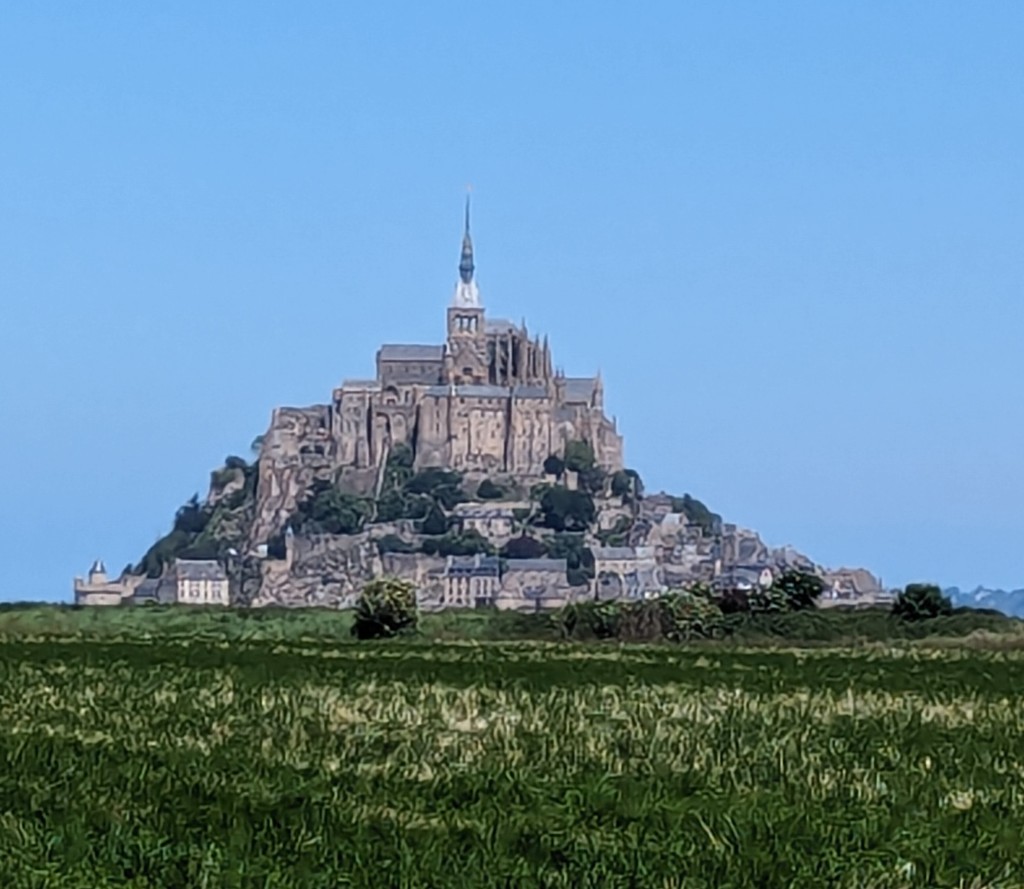
I’m desirous of a swim in the Atlantic and without my asking Serge has proposed a trip to see Mont Saint-Michel, not to tour it, for the roads there are crawling with tourists, but to get to a good look at it. Driving toward the coast of Normandy – after a quick stop to check out the Calvados, cider and other apple products en route – a sharp-eyed visitor will first see the tiny island with an abbey at its peak pop up like a blob on the horizon. Closer in, Mont Saint-Michel rises majestically like a mirage beyond the edge of the fields.

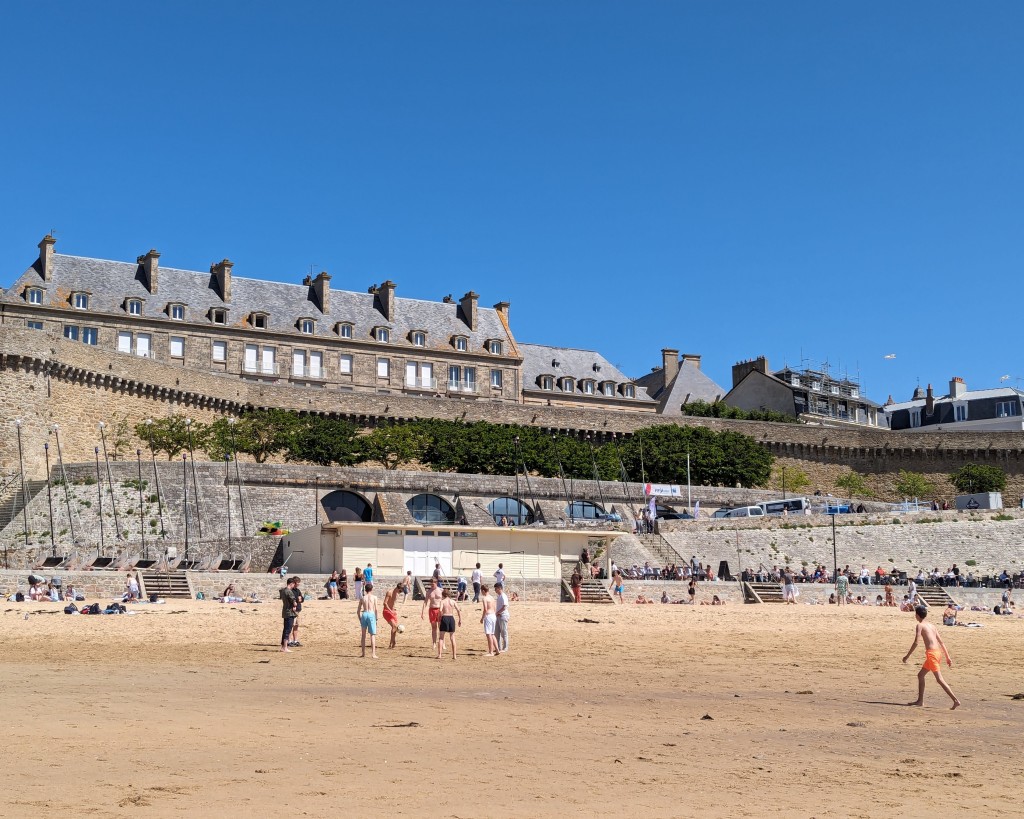
The next stop was Saint-Malo, across the border in Brittany. And a fine place for a swim it is, in La Manche, a bay off the English Channel. As well, Saint-Malo is a historic site with significance for Canadians. Here is where Jacques Cartier set out for what would become Canada; his tomb is in the magnificent Saint-Vincent de Saint-Malo cathedral. In August 1944, the Allied bombing that routed the Germans from France heavily damaged the church, which dates from 1146, including its 1859 neo-gothic spire, which wasn’t replaced until 1971. The pride of the repaired cathedral are paintings by Augustin Frison-Roche, including a triptych of the Apocalypse, installed in 2020.

Any visitor will quickly spot the images of the writer and politician François-René de Chateaubriand, who was born in Saint-Malo in 1768, but you need a guide to point out his tomb on an island just off the beach. It would be a shame to leave Saint-Malo, after a dip in the cool waters, without tasting the sweet Breton cake known as a kouign-amann; I tried the prunelle (sloe berry), said to be the traditional version. Shoppers should be sure to go into the high-end Épices Roellinger store for the finest selection of spices this side of Zanzibar. And after all that driving, reward yourself on the road home with a classic French meal at L’Assiette Gourmand in the small town of Pré-en-Pail.

Photos, clockwise: Augustin Frison-Roche painting in Saint-Vincent de Saint-Malo cathedral; estate home in Mayenne; Mont Saint-Michel; ramparts over the beach in Saint-Malo.

Hamlet, a tragedy in dance

Stripped of its nearly 30,000-word text, William Shakespeare’s The Tragedy of Hamlet, the Prince of Denmark, becomes, in the hands of director Robert Lepage and choreographer/dancer Guillaume Côté, something more akin to an expressionistic painting than a spoken word performance.

Once awakened from his melancholic brooding as the curtain goes up, Côté’s Hamlet is never still again, his inner turmoil made manifest in powerful, athletic dance, driven by John Gzowski’s relentless, evocative, recorded score. This Hamlet is all passion, all action, eschewing narrative for character-driven dance arrangements on a sparsely furnished set where Simon Rossiter’s lighting design animates ever-moving curtains and billowing silks to make a drama that keeps one very much in the present, as only dance can do.

Côté may be the central character, but he doesn’t hog all the best moves. From the opening scene with Hamlet’s friend and supporter Horatio – a brilliantly cast and frightfully nimble Natasha Poon Woon – through emotional scenes between Claudius (veteran Robert Glumbek, who shows an aptitude for classical acting) and Greta Hodgkinson’s stately yet extroverted Gertrude, to the final scenes of violent swordplay, this 100-minute, intermission-less show keeps up the momentum.

Structured as a series of scenes that open with surtitled, white-lettered phrases, à la a 1920s silent movie, this Hamlet is more pastiche than episodic, lightening the mood when the intensity builds to a breaking-point with some humorous mask work, when the players arrive to re-enact the murder of Hamlet’s father. Lepage and Côté have selected elements of Shakespeare’s play most conducive to dance interpretation, including scenes such as Ophelia’s drowning, memorably performed by Carleen Zouboules who is manipulated from underneath a turquoise watery silk, that do not occur in the stage play.

Cast as Polonius, the multi-talented Bernard Meney also performs an expanded role as  Ophelia’s father, as ever so subtly, the show touches on the oedipal elements between sons and mothers, fathers and daughters. Connor Mitton as Rosencrantz and Willem Sadler as Guildenstern likewise see much more on-stage action than Shakespeare gave them.

One hopes that this short run at Toronto’s Elgin Theatre will not be the last for this danced through Hamlet, for it is the kind of show that will only get better with each lightning performance.

The Tragedy of Hamlet, Prince of Denmark

Designed and directed by Robert Lepage

Co-designed and choreographed by Guillaume Côté

Based on the play by William Shakespeare

Produced by Ex Machina/Côté Danse/Dvoretsky Productions

At the Elgin Theatre, Toronto through April 7, 2024.

Photo of Guillaume Côté and Carleen Zouboules courtesy of Show One Productions

Gallery

National Ballet’s Winter Triple Bill heats up the hearts of balletomanes

No matter what one’s taste in ballet, one can be assured of an evening of wall-to-wall, bravura dancing at the National Ballet of Canada’s Winter Triple Bill, running at the Four Seasons Centre for the Performing Arts until March 24.

For those with a craving for the cutting edge in dance, there’s William Yong’s UtopiVerse, a dreamy, multimedia spectacle performed by 25 or more National Ballet dancers. Yong, a Hong-Kong-born dancer, choreographer, dance filmmaker, designer and artistic director of Zata Omm Dance Projects and W Zento Production, arrived in Toronto – via studies and performing in London, England – in 1999. A commission from artistic director Hope Muir to make a piece for the National Ballet, has been a huge opportunity for this multi-faceted artist to think big and make ample use of the finest single group of dancers in the country.

And think big he has, for UtopiVerse is a high-concept feast for the senses, involving huge moving and mesmerizing projections, a resounding, evocative score consisting of excerpts from violin works by Benjamin Britten (with additional music from composer Constantine Caravassilis), and an enormous, glowing glass circle that rises and lowers over the dancers, sometimes enclosing them, sometimes quite ominously.

Mystery and ambiguity abound in UtopiVerse, intended, Yong has said, to be “a visually stimulating playground, where the quest for an ideal and alternative universe takes centre stage.” Bits of Yong’s symbolism send mixed signals, such as the black, wide-brimmed hat worn by The Daemon, (a commanding Christopher Gerty), which to viewers of a certain age, conjures up that TV hero of the 1950s, Zorro.

Koto Ishihara as Lotus and Ben Rudisin as Leo lead a dynamic cast on a wandering narrative set out in sinuous contemporary ballet moves. The dancers – questing strangers in a strange land dressed in flesh-coloured leotards, with shoulder armor and outlined spinal columns to make them look other-worldly – are at times overwhelmed by giant projections of themselves and by the constantly swirling, expanding and transforming white forms etched on the scrim behind them.

But is that not the point? Humans, depicted here as energetic, curious seekers, partnering and re-partnering, are but specks on the surface of a planet that is itself a microdot in our ever-expanding notions of the cosmos we inhabit.

In setting out to create any new dance, Ottawa-born, internationally renowned choreographer Emma Portner asks herself, “What have I not seen in the world?”  Such was the conception for islands, a fascinatingly complex duet for two women made for and premiered by the Norwegian Opera & Ballet in March 2020.

In the National Ballet’s North American premiere of islands, Heather Ogden and Emma Ouellet made an extraordinary duo in a sculptural, ever-evolving partnership, in which they define their own performance space as well as a new physics of women partnering each other. Portner has reimagined the ballerina role without the tutu, a costume that keeps women at a four-foot distance apart from one another. In islands, she puts her dancers in the same pair of pants, so that for the first half of the 20-minute performance, Ogden and Ouellet appeared not so much a pair of conjoined twins, but as one unified creature, limbs intertwining and unwinding in a technique called threading.

Out of the pants, the women can lift one another or leap into the air just as well as any male dancer, shaping the space around them with the imaginative soundscape: excerpts from haunting music by Brambles, Guillaume Ferran, Forest Swords, Lily Konigsberg and Bing & Ruth. Yet islands is not so much a statement of queer identity as it is a demonstration of giving ballerinas their own agency in the context of a dance form traditionally directed by men.

As a closer to the triple bill, nothing could please a classical ballet purist better than the National Ballet’s Canadian premiere of Serge Lifar’s Suite en Blanc from 1943, staged by Charles Jude and Stéphanie Roublot Jude.

From the opening tableau with the all-white costumed dancers ranged on black elevations like sculptures about to be set in motion, Suite en Blanc is an homage the étude, a classical ballet tradition akin to a competition. With unmatched precision and a joyful savoir faire, the dancers perform to Édouard Lalo’s 1882 Suite from Namouna to thrilled applause. On opening night, Isabella Kinch in the Sérénade section, Koto Ishihara in Presto, Spencer Hack in Mazurka and Svetlana Lunkina, with and without partner Harrison James, were especially impressive.

UtopiVerse

Choreography by William Yong

Music of Benjamin Britten with compositions of Constantine Caravassilis

Set and costumes by William Yong

Lighting design Noah Feaver

Projection design Thomas Payette / Mirari

Islands

Choreography by Emma Portner

Music by Brambles, Guillaume Ferran, Forest Swords, Lily Konigsberg, Bing & Ruth

Costumes by Martin Dauchez

Lighting by Paul Vidar Sævarang

Suite en Blanc

Choreography and music arrangement by Serge Lifar

Music by Édouard Lalo

Costumes adapted by the NBoC wardrobe department under supervision of Stacy Dimitropoulos

Lighting adapted by Jeff Logue

A production of the National Ballet of Canada at the Four Seasons Centre for the Performing Arts until March 24, 2024

Photos by Karolina Kuras, clockwise: Koto Ishihara, Ben Rudisin and artists of the National Ballet in UtopiVerse; Emma Ouellet and Heather Ogden in islands; Monika Haczkiewicz, Tene Ward and Chelsy Meiss in Suite en Blanc

Rosencrantz and Guildenstern Alive, Revived and Hilarious

Billy Boyd and Dominic Monaghan lead a stellar cast in a fine production from Halifax’s Neptune Theatre that is a joy to behold and as bracing an engagement for the mind and the funny bone as one is likely to find on stage this season.

First performed in 1966, Tom Stoppard’s absurdist, existentialist play, running at the CAA Theatre until April 6, is as delightfully playful and funny as it ever was, yet newly challenging of our perceptions and our understanding of the uses of theatre.

It’s not as if director Jeremy Webb simply took the play out of mothballs. He enlivens and enriches Rosencrantz by casting experienced and agile actors and giving them plenty of physical activity, music and song. Set designer Andrew Cull’s ingenious use of a pair of movable bleachers makes the transitions in and out of the play at hand and the play performed by the tragedians in William Shakespeare’s Hamlet seamless.

Rosencrantz and Guildenstern Are Dead is above all else a comedy, full of snappy dialogue, wordplay and philosophical badinage. It is also makes a lively commentary on the purpose of theatre, life and death and the whole business of existence and

Webb’s casting of the wondrous Scottish actor Billy Boyd (Pippin in the Lord of the Rings trilogy) with his Lord of the Rings cast mate, the prominent television actor Dominic Monaghan, is the making of this production. This Guildenstern and Rosencrantz, lifted out of their minor roles in Hamlet to become Stoppard’s protagonists, are post-modern versions of Samuel Beckett’s Vladimir and Estragon, passing the time with verbal game-playing and like any of Shakespeare’s clowns and commentators, as nimble of foot as they are of tongue:

ROSENCRANTZ: We might as well be dead. Do you think death could possibly be a boat?

GUILDENSTERN: No, no, no…Death is… not. Death isn’t. You take my meaning? Death is the ultimate negative. Not-being. You can’t not-be on a boat.

ROSENCRANTZ: I’ve frequently not been on a boat.

The curtain comes up on the two of them sitting on bleachers playing at coin tossing in an impossible sequence of flips in which every one of 76 tosses has resulted in heads. The theme of chance and fate and is firmly established. Also, the idea that that it’s only a thin veil that separates concrete reality from make-believe. Behind Rosencrantz and Guildenstern, through a flimsy black curtain we can see figures on bleachers viewing the coin tossers as if they were giving a performance, which of course they are.

Enter the Player, performed by Stratford veteran Michael Blake, a magisterial, yet often regretful, leader of a pack of tragedians – those who perform The Murder of Gonzago in Hamlet – but also the chief roles of Hamlet (a powerful Pasha Ebrahimi), Polonius (Walter Borden), Ophelia (Helen Belay), Gertrude (Raquel Duffy), Claudius (Jonathan Ellul) and others.

It’s all a delightfully complicated, an ironic display of theatricality and the play of language (“Words, words. They’re all we have to go on,” says Guildenstern. “Rhetoric! Game and match!” rejoins Rosenkrantz.)

Entertaining, enlightening and absurdly absorbing.

Rosencrantz and Guildenstern Are Dead

By Tom Stoppard

Directed by Jeremy Webb

Movement director Angela Gasparetto

Set designer Andrew Cull

Lighting designer Leigh Ann Vardy

Sound designer/ composer Deanna H. Choi

Produced by the Neptune Theatre

Presented by Mirvish Productions at the CAA Theatre in Toronto until April 6, 2024

Photo by @stoometzphoto: Dominic Monaghan as Rosencrantz, Billy Boyd as Guildenstern

Gallery

Alice’s Adventures in Wonderland a phantasmagoria to behold

Lewis Carroll’s Alice’s Adventures in Wonderland is a story of the precisely rational overturned by the absurd. It’s a delightful fantasy fit to charm the young yet satirically entertaining enough for parents seeking to decode its characters and plot.

And so goes Christopher Wheeldon’s adaptation of the 1865 novel. A full-length three-act show that breaks the mold of the romantic story ballet, it was co-commissioned by the Royal Ballet and the National Ballet of Canada and premiered on both stages in 2011.

Running throughout March Break, the National Ballet’s latest staging of Alice plays to the max to both sides of our brains, the cerebral and the emotional, with a tremendous cast of dancers supported by David Briskin’s rousing direction of the ballet’s orchestra playing Joby Talbot’s brilliantly innovative score.

Wheeldon had not made a full-length story ballet when he tackled Alice’s Adventures, an audiotape of which he’d listened to repeatedly as a child. Knowing it would be impossible to condense the whole plot into a traditional ballet format, he seized on the vivid characters, the humour and the imagery of Carroll’s book to fashion stunning, often zany dance tableaux. Talbot’s score carries the narrative arc.

Wheeldon chose Talbot as a co-creator, because coming from a background of scoring films, he had transitioned to dance with majestic soundscapes for works by Wheeldon and the Royal Ballet’s Wayne McGregor. “He created these unusual, shimmering orchestral colours that to me felt absolutely like the right direction for Alice’s Adventures in Wonderland,” says Wheeldon.

Talbot’s score illuminates the two worlds that Alice occupies and foregrounds the many transformations that occur in the ballet.

The opening of scene takes us into the upper-class 19th-century, ordered environment of Henry Liddell, Dean of Christ Church, father to daughters Lorina, Alice and Edith. Lewis Carroll, a mathematics professor and friend of the family reads to the girls and performs magic tricks, as tea is served on the lawn amid a game of croquet. Enter Jack, the gardener’s boy, a friend of Alice’s, who offers her a rose clipped from Mrs. Liddell’s sacred rosebushes. Alice in return gives him a jam tart. An enraged Mrs. Liddell pounces on Jack, accusing him of theft and dismissing him from the party.

Talbot describes the musical motif he found for Wonderland as “a strange, shifting bitonal music – a restless ticking clock.” This emphatic tick-tocking percussion also signals the plunge from Alice’s above-ground, secure family life into a dark netherland, where one pill makes you larger and one pill makes you small.

Bob Crowley’s ingenious graphic projections on the changing scrim take Alice down the black hole, following Caroll, now transformed into the White Rabbit, through a glowing jelly mould on the tea table into Wonderland. As the projections of doors on the scrim grow bigger or smaller, so does Alice with each substance she consumes, appear diminutive or gargantuan, against her graphic background.

The score makes Alice an active protagonist and not just an observer of events. She’s chasing the white rabbit, following the smoky messages of a hookah-smoking caterpillar, keeping up with a manic tap-dancing Mad Hatter (the dramatic Ben Rudisin) and encountering a wild-eyed, puppeteered Chesire cat made up of parts that come together and fall asunder.

Tirion Law, with her quick-silver steps and seamless transitions from sheltered girl to able adventurer, strikes just the right balance between portrayal of a child and a sophisticated guide to her wonderland. She and Naoya Ebe as Jack/the Knave of Hearts make a beautiful pairing, especially in the climactic pas de deux.

Talbot gave several of the main characters a musical signature. Donald Thom, a formidable shapeshifter who doubles as Lewis Carroll and the White Rabbit, comes on to the strains of the celesta. Peng-Fei Jiang, in a sinuous solo as the Caterpiller, dances to a middle-eastern-sounding oboe d’amore piece.

Svetlana Lunkina gives an hilarious character portrayal as Alice’s mother, reappearing as The Queen of Hearts. She’s a neurotic, controlling hostess and mistress of ceremonies spoofed by her King, Rex Harrington in one of the campiest, funniest performances of his late career. Talbot gives the queen a tango to perform and themes her with a semi-tone sharpened solo violin to indicate her high-strung nature.

Wheeldon and Talbot pay such attention to the telling detail – the backwards-running hands of a huge pocket watch dangling over Alice’s adventures in a surreal landscape representing many a childhood fear, hangs overhead accompanied by cacophonous, dissonant musical crescendos – that the audience willingly suspends disbelief to enjoy outstanding dancing mixed with a little delirium.

Alice’s Adventures in Wonderland

Choreography  Christopher Wheeldon

Music  Joby Talbot

Scenario  Nicholas Wright

Set and costumes  Bob Crowley

Performed by the artists of the National Ballet of Canada

At the Four Seasons Centre for the Performing Arts, Toronto

March 6 to 17, 2024

Trailer: Alice’s Adventures in Wonderland | The National Ballet of Canada (youtube.com)

Photos by Kira Kuras, from left: Tirion Law and Naoya Ebe as Alice and the Knave of Hearts; the Dormouse, Alice, The Mad Hatter and the March Hare; Donald Thom as the White Rabbit, with Tirion Law. Courtesy of the National Ballet of Canada

The Answer lies in Sami Culture

The answer is land, but what is the question? Perhaps: how can we continue to exist on our ever-shrinking territories and preserve our culture on traditional lands heavily beset by global warming?

Sámi choreographer Elle Sofe Sara articulates it better. About Vástádos Eana/The Answer is Land, opening tomorrow at Harbourfront’s Fleck Dance Theatre, she says, “It’s about inviting the audience into a state where we are all here together. The [performers] are standing equally on the same ground and we take the audience on a journey, one that is based in spirituality.”  

The Answer, created in 2021, is about kinship and the shared sorrow of the Sámi people, colonized for decades, herded into residential schools like the indigenous peoples of Canada, their language and culture suppressed, their Sápmi territories drastically reduced.

Today, the approximately 2 million Sámi peoples, historically occupying the land for about 12,000 years, are confined to lands in the northern tips of Norway, Sweden, Finland and the Kola Peninsula in Russia.

Elle Sofe Sara’s prize-winning show is a celebration of the still thriving Sámi culture and a defiance:  the dancers are literally standing their ground in the face of a global crisis.

A special aspect of the show is the result of collaborating with southern Sámi yoiker and composer Frode Fjellheim, best known on this side of the pond for the adaptation of his 2002 song “Eatnemen Vuelie”, as the opening number for the animated film Frozen.And what is a yoik, you say? Check YouTube and you’ll see a Laplander in traditional dress, softly pounding an indigenous rhythm on a skin-drum while singing songs remarkably similar to those of the British Columbia coastal peoples.

The seven dancers in the show, all women, and some Sámi, perform Fjeillheim’s polyphonically arranged songs in during the show, creating a complete aural and kinetic sphere of Sámi origin. As seen in the trailer, the dance, with its ritualistic movement, is reminiscent of Jean-Pierre Perrault’s 1983 breakthrough show, Joe, which also invited the audience into the bodies of the dancers on stage to share in their unity of purpose.

Sara is known for her globe-trotting creations and has been to Canada before, once performing for the Arctic Winter Games when they were held here. Last year her company performed The Answer in Montreal. Born in the Norwegian villageGuovdageaidnu, she never saw professional dance on stage, but somehow by 16, she knew dancing was for her. Getting dance training, she says, “Opened up a whole new world for me” and was the spark for a life of creation. She holds a master’s degree in dance and received dance training at London’s Laban Trinity School. She’s also an accomplished filmmaker, whose works have appeared on the slate of the Imaginative festival. When not touring Sara lives in the village of her birth, with her partner, a reindeer herder.

As the jury said, in awarding Elle Sofe Sara the 2023 Telenor Culture Prize, “Elle Sofe Sara is an artist who really transcends boundaries. She is a choreographer, a director, and a filmmaker – and to all her productions she brings a lot of playfulness and curiosity as she continues to combine different elements to great effect. She is unafraid to challenge established ideas about the limitations of the performing arts and remains eager to explore new ways of engaging with her audiences.”

Personally, I’m keen to join those viewers

The Answer is Land

Choreography Elle Sofe Sara

Composer Frode Fjellheim

Costume design Line Maher

Set Elin Melberg

Lighting Øystein Heitmann

Toronto premiere runs in the Fleck Dance Theatre, March 6 and 7

See The Answer is Land trailer here: https://vimeo.com/724070129

A rousing play to celebrate Maryusa Nikiforova, martyred Ukrainian anarchist-resister of her day

It takes an anarchist to know one. And it took Norman Nawrocki, Montreal playwright, musician, novelist and anarcho-artist-activist to create MARUSYA NIKIFOROVA: Ukraine’s legendary anarchist warrior. First mounted in 2023, at the 16th annual Montreal International Anarchist Theatre Festival, the one-act, 30-minute play is screening on YouTube until March 8, International Women’s Day, as a fundraiser for the Ukrainian resistance – feminists, environmentalists, anarchists and activists, working on the frontlines against Russian invaders and occupiers.

You can take in the teleplay on Nawrocki’s YouTube channel here: https://youtu.be/Lv05Vd9n1iY and watch for the prompts in the show credits to donate to the Ukrainian resistance group Solidarity Collectives.

Maria Hryhorivna Nikiforova (1885–1919), better known as Marusya, was born in Oleksandrivsk — present-day Zaporizhzhia — a strategic location on the banks of the Dnieper River. Maryusa’s father had fought as an officer in the Russian-Turkish war of 1877-1878. After leaving home at 16, the androgenous teenager (actually intersex) found whatever work she could to support herself and wound up on a factory floor washing bottles in a vodka distillery. Taking up with a communist anarchist group, Maryusa engaged in terrorist acts against the Russian empire, including bombing, expropriation of property and armed robbery.

Imprisoned in 1908, she served time in exile in Siberia, incited a prison riot and once released, joined the international anarchist movement, saw action with anarchists in Spain, enlisted with the French Foreign Legion and fought on the Macedonian front against the Russian empire.

The outbreak of the 1917 Russian revolution forced Nikiforova back to Oleksandrivsk (Aleksandrovsk), where she took up active combat against the Bolsheviks, collaborating with other anarchist/soldiers to form the Ukrainian Peoples Republic of Soviets. She stole from the rich to support the poor, led armed militia into battle and was a chief resistor of and terrorist toward the Bolsheviks and later the White army. Nikiforova even accepted a mission to assassinate Alexander Kolchak, Supreme Ruler of Russia.

Maryusa’s heroic, ceaseless fight to defend Ukrainians against the Russian state stands as profound inspiration for the Ukrainian armed forces and the brave civilian resisters acting against the ongoing Russian assault on their country.

She and her Polish anarchist husband Witold Brzostek were arrested on August 11, 1919 in Crimea, where they had planned to assassinate the White army’s commander-in-chief Anton Denikin. Court-martialed and sentenced to execution by firing squad, they were both shot to death, Nikiforova first having tearfully bid her husband good-bye.

Nawrocki, himself of Ukrainian-Polish descent, has created a stirring, succinct, one-hander, employing an overhead voice as narrator and projections of archival photos to set the scene. His star, Ukrainian actor Mariya Hadubyak, a Montrealer since her immigration to Canada in 2022, performs with the Ukrainian troupe Sozhary. She gives life and soul to Maryusa under Nawrocki’s spirited direction. Vancouver-based musician and composer Vivian Nawrocki (Nawrocki’s sister) created the soundtrack. Producer Babushka Theatre is a Montreal theatre laboratory dedicated to the staging of Ukrainian-Canadian[1]Polish plays.

The YouTube run ends March 8; time enough to show our solidarity with the Ukrainian resistance.

MARUSYA NIKIFOROVA: Ukraine’s legendary anarchist warrior

Written and directed by Norman Nawrocki

Performed by Mariya Hadubyak

Soundtrack by Vivian Nawrocki

Produced by Babushka Theatre

Screening on YouTube until March 8 at https://youtu.be/Lv05Vd9n1iY

For more information about the Ukrainian resistance, go to https://www.solidaritycollectives.org/en/main-page-english

Photo: Mariya Hadubyak as Maryusa Nikiforova in Paris, 1912-13, where she met with international anarchists and Russian exiles.