Procession is a triumph

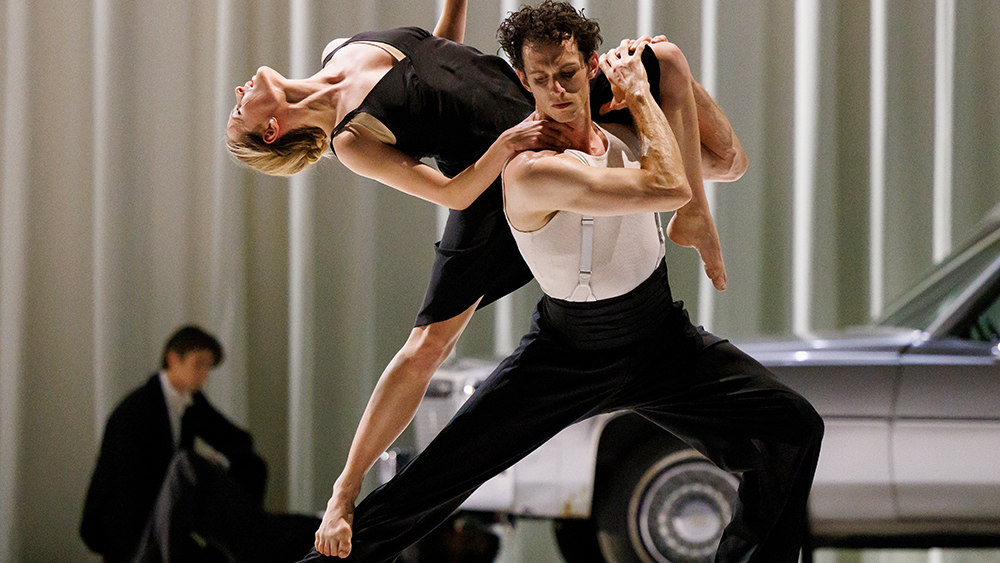
Just blocks away from the Rogers Centre where the Blue Jays were playing in top form in the final game of the World Series on Saturday night, the National Ballet of Canada offered up an equally thrilling performance with the world premiere of Procession.

Created on the company by choreographers Bobbi Jene Smith and Or Schraiber, Procession brings 32 dancers, a cellist and a soprano to the stage for a show that reinvents the story ballet in an extraordinary piece of theatre.

Both professional and life partners, Smith and Schraiber developed their craft as members of The Batsheva Dance Company under the leadership of Ohad Naharin. They are among the most sought-after creators in contemporary ballet and in commissioning this full-length work from them, NBoC artistic director Hope Muir was betting on a collaboration that would take the company to a new level of artistry.

And so it has. Procession will knock your socks off.

The curtains come up on an empty stage that is soon inhabited by a stately procession of dancers in evening dress, each costume designed by Dana Osborne unique to the individual wearing it. The music is mainly baroque – Purcell, Vivaldi, Rameau – arranged by Coleman Itzkoff in six movements for each of the two acts. Itzkoff also performs, joining the dancers on stage and playing cello in ways you’ve never seen it played before.

The music provides a strong framework within which the dance can move in unexpected directions, just as the elegant formal wear is loosened or removed as the dancers burst forth with a passion that upsets our expectations of sombre rituals. As does the presence of on stage of mezzo-soprano Rachel Wilson who at one point appears with a cigarette in one hand and a cocktail glass in the other.

Procession is all about the possibilities of imagining a world on stage, a journey on which anything might happen. Traditional forms are evoked, from the Jewish wedding dance, the hora, to the procession of ballerinas down a ramp in “La Bayadère,” to bits reminiscent of the dancey musical Grease.

Formality is juxtaposed against everyday actions as the dancers break out into trios or solos or pas de deux, then coalesce in grand ensemble moments.

By turns complex, witty, moving and demanding, Procession is like life itself. Not always easy to process, but profound. A kind of Canterbury Tales in dance.

Procession

Choreography by Bobbi Jene Smith and Or Schreiber

Performed by the National Ballet of Canada at the Four Seasons Centre for the Performing Arts in Toronto until November 8, 2025

Photo of Hannah Galway and Christopher Gerty by Bruce Zinger

The National Ballet of Canada is on a roll with Hope Muir

When the National Ballet of Canada opens its mixed program on May 30, a farewell to Guillaume Côté entitled Adieu, the company can expect record-breaking box office numbers. Such has been the effect of a rebrand that coincided with the 2022 appointment of Hope Muir as the Joan and Jerry Lozinski artistic director of the company.

A lot of development has occurred under her tenure, both for the company and for an expanding and diverse audience that has been invited to engage and challenge the dancers and choreographers.

On a chilly April morning, Muir, dressed for a long working day in casual clothes and no-nonsense running shoes, offers some background. After a career that has made her the most fully rounded artistic leader the company has ever seen, Muir has lost no time in re-shaping the company to ensure it can thrive and engage its audience as it approaches its 75th anniversary.

Changes she has introduced have been swift and effective. Following the pandemic, Muir had the opportunity to recruit dancers who have been with her from the beginning of her tenure. (“There was a lot of natural attrition and some key retirements.”) Today the average age of the performers is around 25, with an age range appropriate for a big classical company.

Developing new repertoire and reviving works such as next season’s Pinocchio, balancing the contemporary with the classical “legacy” ballets such as Swan Lake, has been at the forefront of what Muir sees as her mandate: to be a company that keeps the art form relevant and shows others the way forward.

The path to artistic directorship of a major ballet company has been quite intentional. Born in Toronto, Muir danced from a young age. Her formal training began at 15, when her mother’s work took her to London in the late 1980s. She was one of 10 out of 400 applicants accepted into the London Festival Ballet School. She first danced with the English National Ballet. Over her 17 years as a performer, Muir developed expertise in both classical and contemporary dance, performing with Rambert Dance Company and Hubbard Street Dance Chicago.

After retiring from dancing in 2006, she took on the job of rehearsal director and assistant artistic director for the Scottish Ballet, and in 2017 took over as artistic director of Charlotte Ballet, in Charlotte, North Carolina. Throughout this time, Muir worked with a range of choreographers and companies, including the National Ballet of Canada, where she staged Christopher Bruce’s Rooster in 2008 and assisting in the mounting of Crystal Pite’s Emergence in 2009.

Muir is well equipped to strike a balance between the classical and the contemporary and to find what excites both dancers and audiences. “What is interesting to me is the way classical and contemporary ballet support each other.” Both afford dancers an avenue to innovation. Dancers become part of the creative process in any given season, along the way developing new skills.  “If you make smart choices within a season, you’re giving dancers a chance to access the work. It’s quite visceral and the dancers are really engaged. That balance [between classical and contemporary] is what is giving us this momentum.”

Director of Marketing and Communications Belinda Bale has been working closely with Muir on the rebranding of the National Ballet. In 2022 the company hired Bruce Mau Design to conduct a process that was as much about attitude as about giving the company a new look. In consultation with all the stakeholders, from dancers to audience members to those with little awareness of professional dance, some key elements emerged. “The word ‘bold’ kept coming up,” Bale says. “And that’s very much Hope. She is bold and she is brave.”

Box office numbers tell the tale: with Muir’s first season in 2022-2023, the ticket sales returned to pre-pandemic levels, at $13.4 million. For the 2024-25 season, sales are on track to reach $16.4 million.

Since 2022, the company has performed a host of works that are either new or new for the National Ballet. Traditionally the mixed program has been a bit of a hard sell, but with the Winter mixed program this past February/March, a buzz of  excitement arose from what seemed like a packed house for a North American premiere of David Dawson’s The Four Seasons, a world premiere of Marco Goecke’s Morpheus’ Dream set to the music of Keith Jarrett and Lady Gaga, and a dynamic new staging of Antony Tudor’s The Leaves are Fading.

Muir herself says it’s an exciting moment to be at the helm of the National Ballet in the approach to the company’s 75th anniversary season in 2026-27. David Dawson, the Ballet’s resident choreographer for the next five years, will create a full-length work for the season, in what promises to be a very forward-looking celebration.

“It’s not just about acquisition,” says Muir of the works coming into the repertoire. “It’s about the creation as well. You’re giving the dancers a chance to access the work. What style, how much improv and how much acting: all of these things feed one another.”

As one of her bolder moves, Muir has introduced Sharing the Stage, a program to bring in prominent dancer/choreographers from outside the company to perform with them at the Four Seasons Centre. Tickets to the show on June 17 are only $20. Nova Dance will perform works by José Navas and Nova Bhattacharya and the National Ballet will present excerpts from Swan Lake and Jennifer Archibald’s new work, King’s Fall.

In the meantime, we have Adieu, a celebration of principal dancer and choreographic associate Guillaume Côté, who departs the company to work full-time with Côté Danse. From May 30 to June 5 he’ll perform in two of his own works, Grand Mirage and Bolero and company members will introduce Toronto-born Ethan Colango’s new work, Reverence, inspired by the Hieronymus Bosch painting The Garden of Earthly Delights

Photo of Hope Muir by Karolina Kuras

A Swan Lake for the ages

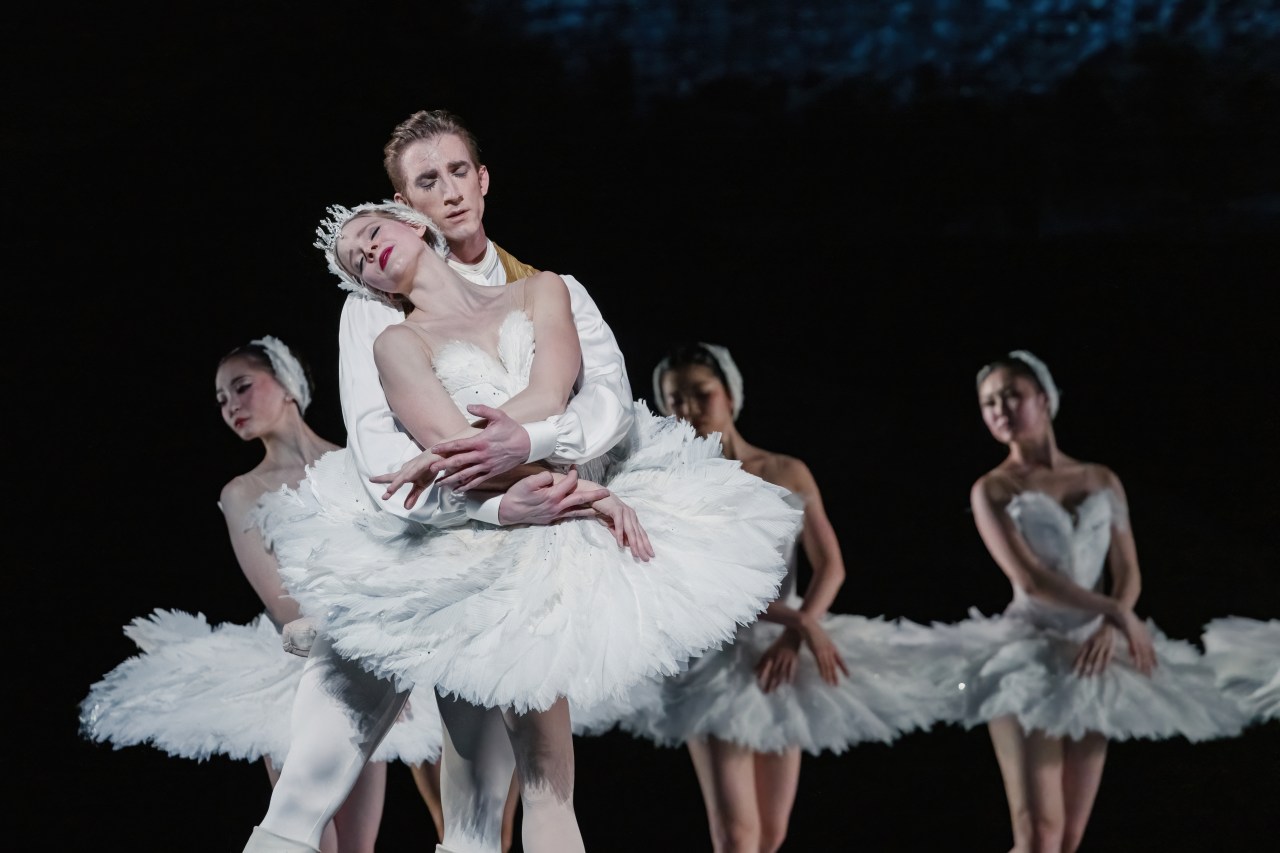
Karen Kain, then the outgoing artistic director of the National Ballet of Canada, set herself a tall order when she determined to re-stage the Erik Bruhn 1966 production of Swan Lake. Premiering in 2022, this new edition of the Tchaikovsky classic, directed by Kain, with new choreographic invention from her, Christopher Stowell and Robert Binet, brings the 1895 story ballet by Marius Petipa and Lev Ivanov, into the 21st century.

And if it is wall-to-wall bravura dancing you’re looking for, this is the crowd-pleasing-est ballet you are ever likely to see, performed with precision by 50 dancers of the NBoC.  That is exactly what any ballet company needs and what Kain and her team have delivered. The Swan Lake run was entirely sold out before it opened.

Gabriela Týlešová’s lavish set, props and costumes and Bonnie Beecher’s inventive lighting design ensure that this Swan Lake enchants as it should. (Check out the 1966 film of the Bruhn Swan Lake on YouTube if you want to see what a museum piece looks like.)

Any Swan Lake demands a flawless technique and plenty of stamina and this one, with its relentless pace, perhaps more others. Just ask Heather Ogden, who will dance her seasoned Odette/Odile for the last time March 15, 18 and 21.

Among the human touches brought to this production is a brief, ghostly prologue showing the young women dancing in a forest glade before stumbling into the clutches of the bewitching Baron Rothbart, who turns them all into swans. The giant, feathery, scene-stealing wings symbolize his power over human happiness. Second soloist Peng Fei Jiang makes a haunting Rothbart who moves with beautiful cunning to envelope all who approach him in his spell. Odette is his chief prize and it is she who reverts to human at night, when Prince Siegfried encounters her, setting aside his crossbow to learn of the curse of Rothbart. Only Siegfried’s vow of undying love can release Odette from swanhood.

Genevieve Penn Nabity, a sparkling Odette, captivates both Ben Rudisin’s noble Siegfried and the audience, agog at Swan Lake’s famous feats, such as her 32-fouettées in Odette’s dance or the Act II pas de deux with Siegfried.  Ben Rudisin, understandably a little jittery in an opening night performance he wasn’t originally scheduled for, has the grace, the stature and the physical talent for the part of a prince under pressure from his mother to marry. Nuances indicating thoughts and feelings will come later. Veteran character dancer Stephanie Hutchison makes an appropriately stately yet fiery presence, insisting on her gloomy son’s need to find a wife.

First soloist Donald Thom, in the powerful supporting role of Siegfried’s close friend Benno, gave the most animated and expressive showing of the evening. Kain told her principal dancers to put something of themselves into the characters and once they’ve mastered the steps most ballerinas and male dancers do just that.

The big set pieces of Swan Lake, such as the linked-armed dance of the little swans put this viewer in mind of ballet competitions past, and tend to dispel any thoughts of romance, character development or the arc of tragedy that is Swan Lake. In the end, drama is subsumed by the Tchaikovsky score and finesse of Russian classical ballet.

Not to worry, as this production develops, the dancers will grow with it. In the meantime, better catch experienced tragedians Heather Ogden and Harrison James before this show closes on March 22.

Swan Lake

Directed and staged by Karen Kain; choreographed by Kain, Christopher Stowell and Robert Binet after Erik Bruhn, Lev Ivanov and Marius Petipa

At the Four Seasons Centre for the Performing Arts in Toronto until March 22, 2025

Photo of Genevieve Penn Nabity and Ben Rudisin with artists of the Ballet in Swan Lake by Karolina Kuras.

Gallery

National Ballet’s Winter Triple Bill heats up the hearts of balletomanes

No matter what one’s taste in ballet, one can be assured of an evening of wall-to-wall, bravura dancing at the National Ballet of Canada’s Winter Triple Bill, running at the Four Seasons Centre for the Performing Arts until March 24.

For those with a craving for the cutting edge in dance, there’s William Yong’s UtopiVerse, a dreamy, multimedia spectacle performed by 25 or more National Ballet dancers. Yong, a Hong-Kong-born dancer, choreographer, dance filmmaker, designer and artistic director of Zata Omm Dance Projects and W Zento Production, arrived in Toronto – via studies and performing in London, England – in 1999. A commission from artistic director Hope Muir to make a piece for the National Ballet, has been a huge opportunity for this multi-faceted artist to think big and make ample use of the finest single group of dancers in the country.

And think big he has, for UtopiVerse is a high-concept feast for the senses, involving huge moving and mesmerizing projections, a resounding, evocative score consisting of excerpts from violin works by Benjamin Britten (with additional music from composer Constantine Caravassilis), and an enormous, glowing glass circle that rises and lowers over the dancers, sometimes enclosing them, sometimes quite ominously.

Mystery and ambiguity abound in UtopiVerse, intended, Yong has said, to be “a visually stimulating playground, where the quest for an ideal and alternative universe takes centre stage.” Bits of Yong’s symbolism send mixed signals, such as the black, wide-brimmed hat worn by The Daemon, (a commanding Christopher Gerty), which to viewers of a certain age, conjures up that TV hero of the 1950s, Zorro.

Koto Ishihara as Lotus and Ben Rudisin as Leo lead a dynamic cast on a wandering narrative set out in sinuous contemporary ballet moves. The dancers – questing strangers in a strange land dressed in flesh-coloured leotards, with shoulder armor and outlined spinal columns to make them look other-worldly – are at times overwhelmed by giant projections of themselves and by the constantly swirling, expanding and transforming white forms etched on the scrim behind them.

But is that not the point? Humans, depicted here as energetic, curious seekers, partnering and re-partnering, are but specks on the surface of a planet that is itself a microdot in our ever-expanding notions of the cosmos we inhabit.

In setting out to create any new dance, Ottawa-born, internationally renowned choreographer Emma Portner asks herself, “What have I not seen in the world?”  Such was the conception for islands, a fascinatingly complex duet for two women made for and premiered by the Norwegian Opera & Ballet in March 2020.

In the National Ballet’s North American premiere of islands, Heather Ogden and Emma Ouellet made an extraordinary duo in a sculptural, ever-evolving partnership, in which they define their own performance space as well as a new physics of women partnering each other. Portner has reimagined the ballerina role without the tutu, a costume that keeps women at a four-foot distance apart from one another. In islands, she puts her dancers in the same pair of pants, so that for the first half of the 20-minute performance, Ogden and Ouellet appeared not so much a pair of conjoined twins, but as one unified creature, limbs intertwining and unwinding in a technique called threading.

Out of the pants, the women can lift one another or leap into the air just as well as any male dancer, shaping the space around them with the imaginative soundscape: excerpts from haunting music by Brambles, Guillaume Ferran, Forest Swords, Lily Konigsberg and Bing & Ruth. Yet islands is not so much a statement of queer identity as it is a demonstration of giving ballerinas their own agency in the context of a dance form traditionally directed by men.

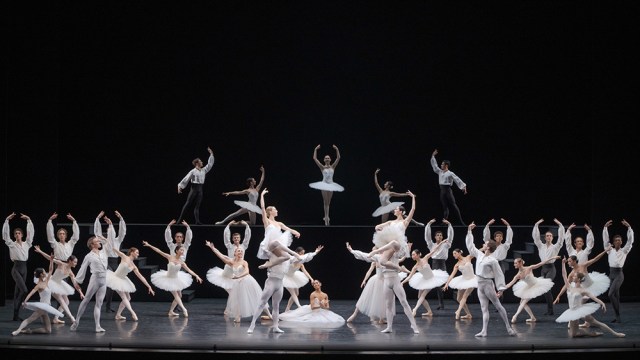
As a closer to the triple bill, nothing could please a classical ballet purist better than the National Ballet’s Canadian premiere of Serge Lifar’s Suite en Blanc from 1943, staged by Charles Jude and Stéphanie Roublot Jude.

From the opening tableau with the all-white costumed dancers ranged on black elevations like sculptures about to be set in motion, Suite en Blanc is an homage the étude, a classical ballet tradition akin to a competition. With unmatched precision and a joyful savoir faire, the dancers perform to Édouard Lalo’s 1882 Suite from Namouna to thrilled applause. On opening night, Isabella Kinch in the Sérénade section, Koto Ishihara in Presto, Spencer Hack in Mazurka and Svetlana Lunkina, with and without partner Harrison James, were especially impressive.

UtopiVerse

Choreography by William Yong

Music of Benjamin Britten with compositions of Constantine Caravassilis

Set and costumes by William Yong

Lighting design Noah Feaver

Projection design Thomas Payette / Mirari

Islands

Choreography by Emma Portner

Music by Brambles, Guillaume Ferran, Forest Swords, Lily Konigsberg, Bing & Ruth

Costumes by Martin Dauchez

Lighting by Paul Vidar Sævarang

Suite en Blanc

Choreography and music arrangement by Serge Lifar

Music by Édouard Lalo

Costumes adapted by the NBoC wardrobe department under supervision of Stacy Dimitropoulos

Lighting adapted by Jeff Logue

A production of the National Ballet of Canada at the Four Seasons Centre for the Performing Arts until March 24, 2024

Photos by Karolina Kuras, clockwise: Koto Ishihara, Ben Rudisin and artists of the National Ballet in UtopiVerse; Emma Ouellet and Heather Ogden in islands; Monika Haczkiewicz, Tene Ward and Chelsy Meiss in Suite en Blanc

Gallery

Alice’s Adventures in Wonderland a phantasmagoria to behold

Lewis Carroll’s Alice’s Adventures in Wonderland is a story of the precisely rational overturned by the absurd. It’s a delightful fantasy fit to charm the young yet satirically entertaining enough for parents seeking to decode its characters and plot.

And so goes Christopher Wheeldon’s adaptation of the 1865 novel. A full-length three-act show that breaks the mold of the romantic story ballet, it was co-commissioned by the Royal Ballet and the National Ballet of Canada and premiered on both stages in 2011.

Running throughout March Break, the National Ballet’s latest staging of Alice plays to the max to both sides of our brains, the cerebral and the emotional, with a tremendous cast of dancers supported by David Briskin’s rousing direction of the ballet’s orchestra playing Joby Talbot’s brilliantly innovative score.

Wheeldon had not made a full-length story ballet when he tackled Alice’s Adventures, an audiotape of which he’d listened to repeatedly as a child. Knowing it would be impossible to condense the whole plot into a traditional ballet format, he seized on the vivid characters, the humour and the imagery of Carroll’s book to fashion stunning, often zany dance tableaux. Talbot’s score carries the narrative arc.

Wheeldon chose Talbot as a co-creator, because coming from a background of scoring films, he had transitioned to dance with majestic soundscapes for works by Wheeldon and the Royal Ballet’s Wayne McGregor. “He created these unusual, shimmering orchestral colours that to me felt absolutely like the right direction for Alice’s Adventures in Wonderland,” says Wheeldon.

Talbot’s score illuminates the two worlds that Alice occupies and foregrounds the many transformations that occur in the ballet.

The opening of scene takes us into the upper-class 19th-century, ordered environment of Henry Liddell, Dean of Christ Church, father to daughters Lorina, Alice and Edith. Lewis Carroll, a mathematics professor and friend of the family reads to the girls and performs magic tricks, as tea is served on the lawn amid a game of croquet. Enter Jack, the gardener’s boy, a friend of Alice’s, who offers her a rose clipped from Mrs. Liddell’s sacred rosebushes. Alice in return gives him a jam tart. An enraged Mrs. Liddell pounces on Jack, accusing him of theft and dismissing him from the party.

Talbot describes the musical motif he found for Wonderland as “a strange, shifting bitonal music – a restless ticking clock.” This emphatic tick-tocking percussion also signals the plunge from Alice’s above-ground, secure family life into a dark netherland, where one pill makes you larger and one pill makes you small.

Bob Crowley’s ingenious graphic projections on the changing scrim take Alice down the black hole, following Caroll, now transformed into the White Rabbit, through a glowing jelly mould on the tea table into Wonderland. As the projections of doors on the scrim grow bigger or smaller, so does Alice with each substance she consumes, appear diminutive or gargantuan, against her graphic background.

The score makes Alice an active protagonist and not just an observer of events. She’s chasing the white rabbit, following the smoky messages of a hookah-smoking caterpillar, keeping up with a manic tap-dancing Mad Hatter (the dramatic Ben Rudisin) and encountering a wild-eyed, puppeteered Chesire cat made up of parts that come together and fall asunder.

Tirion Law, with her quick-silver steps and seamless transitions from sheltered girl to able adventurer, strikes just the right balance between portrayal of a child and a sophisticated guide to her wonderland. She and Naoya Ebe as Jack/the Knave of Hearts make a beautiful pairing, especially in the climactic pas de deux.

Talbot gave several of the main characters a musical signature. Donald Thom, a formidable shapeshifter who doubles as Lewis Carroll and the White Rabbit, comes on to the strains of the celesta. Peng-Fei Jiang, in a sinuous solo as the Caterpiller, dances to a middle-eastern-sounding oboe d’amore piece.

Svetlana Lunkina gives an hilarious character portrayal as Alice’s mother, reappearing as The Queen of Hearts. She’s a neurotic, controlling hostess and mistress of ceremonies spoofed by her King, Rex Harrington in one of the campiest, funniest performances of his late career. Talbot gives the queen a tango to perform and themes her with a semi-tone sharpened solo violin to indicate her high-strung nature.

Wheeldon and Talbot pay such attention to the telling detail – the backwards-running hands of a huge pocket watch dangling over Alice’s adventures in a surreal landscape representing many a childhood fear, hangs overhead accompanied by cacophonous, dissonant musical crescendos – that the audience willingly suspends disbelief to enjoy outstanding dancing mixed with a little delirium.

Alice’s Adventures in Wonderland

Choreography  Christopher Wheeldon

Music  Joby Talbot

Scenario  Nicholas Wright

Set and costumes  Bob Crowley

Performed by the artists of the National Ballet of Canada

At the Four Seasons Centre for the Performing Arts, Toronto

March 6 to 17, 2024

Trailer: Alice’s Adventures in Wonderland | The National Ballet of Canada (youtube.com)

Photos by Kira Kuras, from left: Tirion Law and Naoya Ebe as Alice and the Knave of Hearts; the Dormouse, Alice, The Mad Hatter and the March Hare; Donald Thom as the White Rabbit, with Tirion Law. Courtesy of the National Ballet of Canada

Multiple takes on the Orpheus myth

George Balanchine’s Chaconne, extracted and assembled from his choreography for the Metropolitan Opera’s Orfeo of 1936, sticks to the pure language of dance. The piece was made for Suzanne Farrell, and it premiered at the New York City Ballet in 1976. Performed for the first time by the National Ballet of Canada, Chaconne, staged by Farrell, Lindsay Fischer and Christopher Stowell, is pure bliss.

Dancing with Harrison James in the principal pas de deux, Heather Ogden was poetry in motion on opening night, as were the other leading ladies, Jordana Daumec and Miyoko Koyasu. In all its intricate variations, including the large ensemble section, extreme fleetness of foot is required, but never in this performance was it achieved at the expense of a united expression of love and festivity.

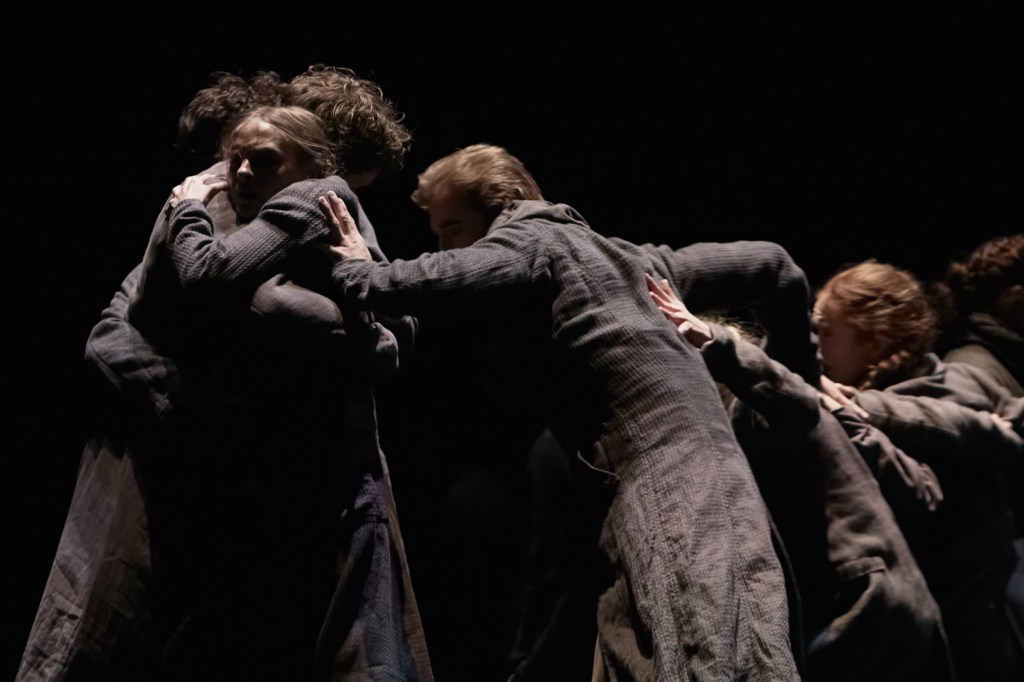
Singleness of purpose was exactly what is missing from Orpheus Alive, the sprawling dance created by National Ballet choreographic associate Robert Binet in collaboration with New York composer Missy Mazzoli and Toronto writer and dramaturge Rosamund Small. Five years in the making, Orpheus Alive is a reworking, perhaps an overworking, of the myth of Orpheus and Eurydice in which Orpheus is the female – alive in contrast with so many leading women in story ballets who are either not human, asleep or ghosts.

Jenna Savella, in a bright yellow skirt that makes her Orpheus always the spotlight, takes charge of her own story, breaking the fourth wall to appeal to the audience, microphone in hand, as the gods of the underworld. As in the myth, Orpheus, the musician offspring of Apollo, can only retrieve Eurydice, captive in Hades, through the persuasive power of art.

Stretching the metaphor of creation and the redemptive power of art in a story always commenting on itself makes Orpheus’s journey into the River Styx to reclaim her lost Eurydice a hard one to follow. Orpheus can only regain Eurydice, performed with grace by Spencer Hack, if she does not look back on her return to earth. This she does: with a removal of her black blindfold. And so is condemned to tell her story over and over again.

Hyemi Shin’s set and costume design creates a Hieronymus Bosch-like Hades, with a trio of yappy switchboard operators – an update of the three-headed dog Cerberus – as gatekeepers at the entrance to hell. A huge crowd of dancers serve as furies, apparitions and zombies, harried into action by Mazzoli’s thundering, ominous score. But the appearance of subway workers (the underground is depicted as the Osgoode station) in neon orange lifejackets certainly blurred the line between parody and serious intent. There are many layers to this reinterpretation of the Orpheus story but in the end, only one theme remains clear: It’s hard to lose the one you love.

Chaconne

Choreography by George Balanchine,

Music by Christoph Willibald Gluck

Orpheus Alive

Choreography by Robert Binet

Composer Missy Mazzoli

A National Ballet of Canada program at the Four Seasons Centre for the Performing Arts, Toronto, until November 21

Spencer Hack and Jenna Savella with Artists of the National Ballet. Photo by Karolina Kura


A thrilling spectacle to stir the heart

The Sleeping Beauty, jewel in the crown of the National Ballet of Canada’s classical repertoire, boasts more bravura dancing per square meter per minute than one could ever hope for in any other ballet. Not to mention enough brocade, velvet, feathers, ermine and sparkling jewels to furnish a Liberace concert.

Sumptuous visually, musically and balletically, the Tchaikovsky/Petipa grand ballet, first performed in the Mariinsky Theatre in St. Petersburg in 1890, is the ultimate showcase for the highly accomplished classical ballet dancer. In 2006, artistic director Karen Kain restaged Rudolf Nureyev’s opulent 1972 production for the company with refurbished set and costumes; The Sleeping Beauty made the company’s spectacular entrance on to the stage of the newly opened Four Seasons Centre for the Performing Arts. At the same time Kain upped the ante for the dancers, giving the audience a continuous round of high-octane, dazzling variations en pointe and en aire.

Yet drama is not sacrificed to athletic spectacle. Ivan Vsevolozhsky’s libretto provided Tchaikovsky with a poetic interpretation of the Charles Perrault fairy tale, inspiring the composer to create what he considered one of his best works, meticulously crafted and arranged to express in dance the powerful themes of the conquering power of love over hatred and envy, innocence and joy over corruption and power-mongering. (Vsevolozhsky also specified the ballet be set in the opulent – to the point of decadent — Versailles court of Louis the XIV.)

In 1890  Marius Petipa placed Princess Aurora at the centre of the ballet, to present the virtuosity of the Italian prima ballerina Carlotta Brianza. When Nureyev choreographed his production of The Sleeping Beauty, he created a more elaborate role for Prince Florimund, inserting himself as the melancholy prince prominently into Act II. But the central storyline remains that of Aurora, whose transformation from 16-year-old innocent full of joy, through ethereal, romantic ideal in the vision the Lilac Fairy presents to the prince, to mature womanhood constitutes the drama of the ballet.

Heather Ogden’s Aurora makes this fairy tale journey come true, in her spirited embodiment of a girl’s blossoming as if lit from within. She is sublime in the famous Rose Adagio, when the princess is presented to her four suitors (gallant Félix Paquet, Nan Wang, Peng-Fei Jiang and Ben Rudisin), balancing elegantly on the tip of one pointe shoe for the culminating moment, like Botticelli’s Venus Rising.

Guillaume Côté, once out of his velvet jacket and over-the-knee boots, which seem dated and too preening for the romantic hero Prince Florimund, arrives with such attack he seems to fly across the stage in his Act II solo. He and Ogden make a formidable pair in the grand pas de deux, the culmination of many fine set pieces —


including the diamond pas de cinq in Act III performed by Chelsy Meiss and Diamond Man Jack Bertinshaw — rising on rounds of applause in the balletic expression of a rebirth after a century’s journey into the darkness.

The performance of the Variations in Act I are no mere warm-up for the grand pas de deux to come. Hannah Fischer is particularly brilliant in the solo First Variation, but all six performances are stand-outs, highlighting the beauty and the symmetry that brings order amidst the chaos sown by Carabosse with her evil curse to eliminate Aurora and bring down the kingdom. Alejandra Perez-Gomez’s Carabosse is a deeply malevolent force, close to the ground and pagan, pitted against Taya Howard’s radiant Lilac Fairy who floats across the stage as she casts her spell to put the court to sleep for a hundred years.

Jonathan Renna brings a delightful curve of the calf to the dancing he’s afforded as King Florestan to Sophie Letendre’s Queen.

This production preserves the high-camp elements that, along with the pussycats in Act III bring an element of comic relief in the form of outlandish headgear, overly abundant male wigs and the over-the-top evil obsequy of Carabosse’s slimy attendants and the caricature witches, who preside over the birthday party like a black cloud. Such details are reminders of what happens in worldly realms when excess and inward-looking vanity leaves room for rot to set in. And they set off the grace and joy expressed in the many-splendored, stiffly tutued, flawless ensemble dances, such as that of the maids of honour and their pages, that take us through scene by scene in this thrilling feast of a ballet.

The Sleeping Beauty

Music by Pyotr Ilyich Tchaikovsky

Produced by Rudolf Nureyev after Marius Petipa

Staged by Karen Kain and the artistic staff of the National Ballet of Canada

Set and costume design by Nicholas Georgiadis

At the Four Seasons Centre for the Performing Arts, Toronto, through March 18

Photo of Heather Ogden and Guillaume Côté by Bruce Zinger.